“The Thing With Feathers”: Getting Lost in Your Own Metaphor
Based on the novel by Max Porter and starring Benedict Cumberbatch, The Thing With Feathers is an attempt to explore the depths of human grief.
What Is The Thing With Feathers About?
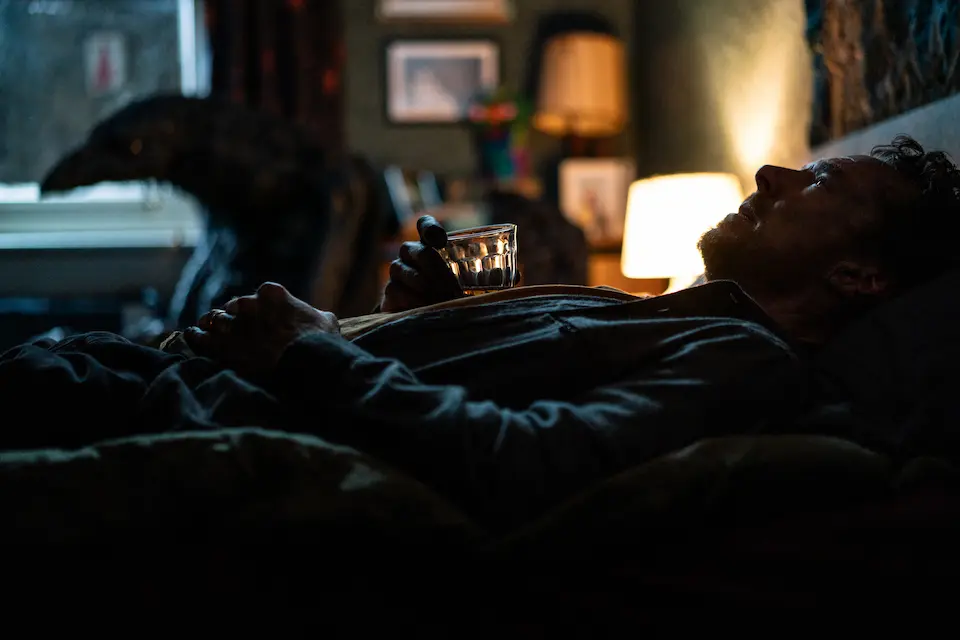
The unexpected death of his wife leaves Dad to raise two young sons. The broken family is going through a period of grief, struggling to adapt to their new lives with such a major absence. Somehow, this grief takes a form —the Crow, a frightful creature that lurks in the shadows—and starts to take over Dad’s life.
Grief as Horror
I walked into the theater expecting a drama, maybe a character study, so I was surprised to find the film taking sudden shifts from drama to horror.
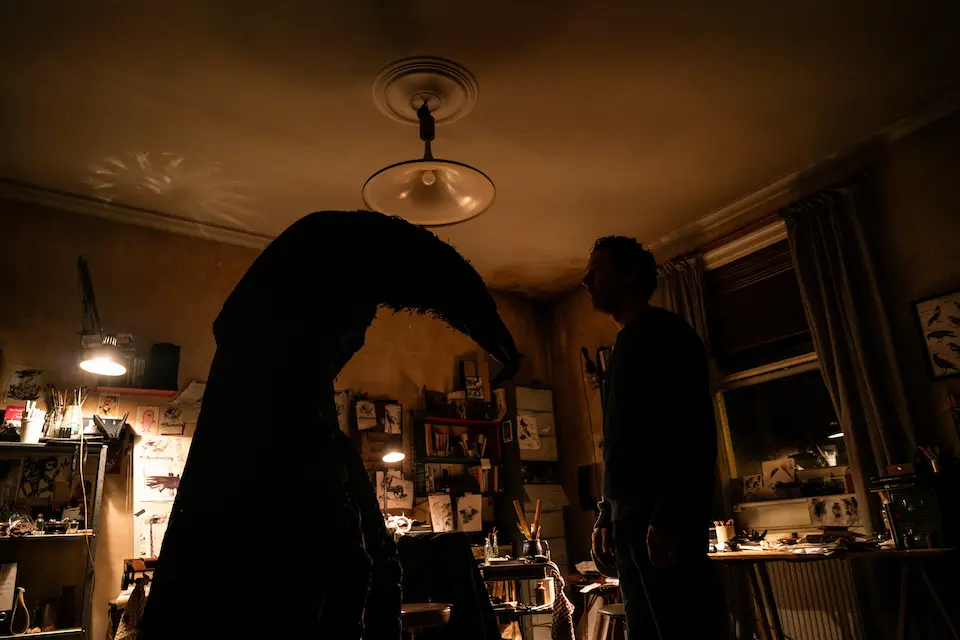
The main character is an illustrator, and the image of the Crow comes directly from his head. The creature materializes and begins to haunt him, making sure he revives every painful memory, and pushing forward every last bit of guilt for not being able to do more for his two young kids. At times, the crow becomes violent and the torture inflicted on the Dad goes from psychological to physical.
The cinematography, as well as the design of the Crow, is quite nice to look at, and as a whole, the project achieves an interesting atmosphere. I think I can see what director Dylan Southern was aiming for by representing the grieving period as a dark and terrifying alternate reality. However, while the concept is great in theory, the execution is lacking in many points.
More Crow Than Meaning
The main problem with The Thing With Feathers is that it gets lost in its own metaphors. The Crow is a physical representation of grief, and the family has to learn to live with it; it’s pretty easy to get that from the start. But the film wants to get deeper, be more poetic, and also show us how cool the design of the Crow is every five seconds. It’s not long before the whole thing starts to come off as pretentious instead of insightful.
I personally believe that the different points of view (the Dad, the Crow, and the kids) in every chapter do not work. According to what I’ve read, this is the way it was structured in the source material, but in the film it makes part of the story feel unnecessarily convoluted and sometimes even repetitive.
In short, whatever the production design accomplishes is ultimately overshadowed by the film’s refusal to stop wasting time on spelling out the message for us.
Benedict Cumberbatch as Dad
Despite the focus on the crow, Benedict Cumberbatch’s performance is the one thing that brings home the topic of grief.
His character is a dad who is suffering from the unexpected loss of his wife and also realizing just how much the family relied on her to function. He does not know how to emotionally support his kids or get them to respect him; the house and the schedules are a mess, and he cannot focus on his work.
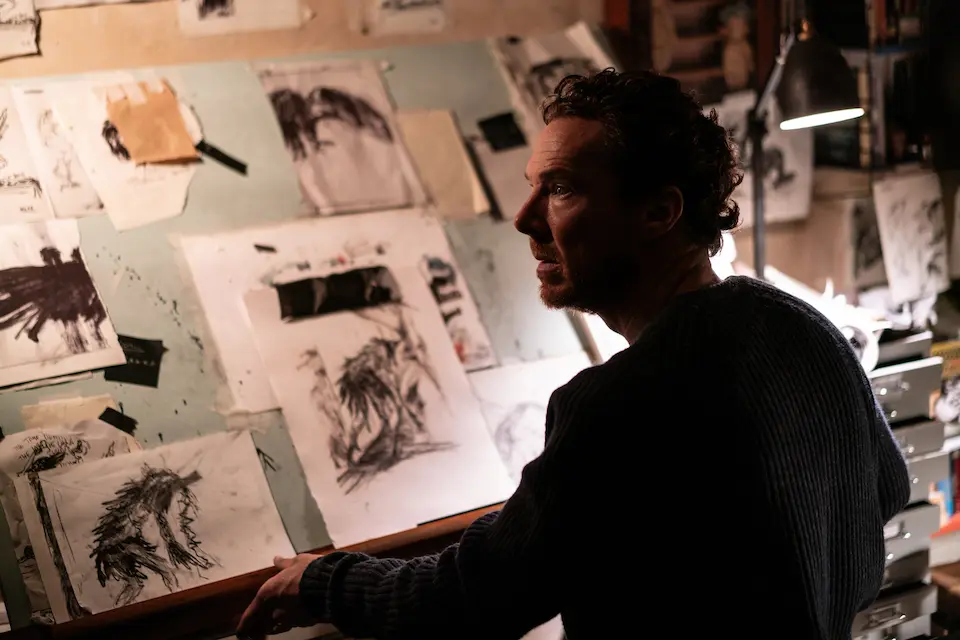
He is spiraling out of control, and Cumberbatch offers a raw depiction of the anguish that comes with losing one of the pillars of your life. Despite other flaws, this is a performance capable of making one shed some tears, and it is the only reason the movie is worthy of some attention.
Less is More
An excellent film is capable of taking complex subjects and breaking them down in a way that makes them accessible to anyone, regardless of whether they have previous experience with them or not. It’s not about dumbing the subject down, but rather explaining it in simple terms.
The Thing With Feathers manages to do something quite rare: making a topic more complex than it needs to be while simultaneously dumbing it down. That is why, despite its redeeming qualities, the film fails to achieve its goal.
*This film was screened at a press preview.