“Wuthering Heights”(2026): A Disastrous and Unfaithful R-Rated Fanfic
True to its style, Hollywood managed to turn a classic of English literature into a pit of degeneracy with as much depth as an Instagram ad. Here is everything that went wrong with the new adaptation of “Wuthering Heights”
I’m old enough to remember a time when a classic book being adapted for the screen was not met with a collective eye roll and a “Why can’t they leave it alone?” cry from the general public.
One could argue that we have had terrible movie and TV adaptations of classics for almost as long as said mediums have existed, and they would be right: poor quality or blatant misunderstanding of the source material has occurred on several occasions with varied results. Some of those projects even won over movie audiences despite their defects.
But this day and age is characterized by a different and more questionable practice: taking a classic, purposely stripping it of its context and themes, leaving only a few recognizable elements, and replacing the huge voids with “modern”, pre-approved topics unrelated to the piece.
I’ve seen enough of Emerald Fennell’s work to know the kind of subjects she deems “interesting” (you can check my review of Saltburn if you don’t know what I mean), so I did not walk into “Wuthering Heights” expecting a faithful retelling of Emily Brontë’s novel. The few trailers and promotional materials I watched beforehand gave me an idea of where she was going. My only question was how far she was actually going to take it.
Wuthering Heights in Literature
First published in 1847, Wuthering Heights tells the story of two families, the Earnshaws and the Lintons, both owners of extensive estates in Yorkshire. At the center are Catherine, the spoiled daughter of Ernshaw, and Heathcliff, a boy taken in by the master of the house.
The book introduces us to the characters and their lives through the narration of Nelly, a servant who is well acquainted with both families, as she shares the events with Mr. Lockwood, the new tenant of the Thrushcross Grange. Along with him, we get to know the story of passion and revenge that runs like an ugly scar through two generations of characters.
The Casting Decisions: The First Huge Mistake
The first thing to know is that the novel starts when Catherine and Heathcliff are kids (which resembles what is shown in the movie), but by the time Catherine marries Edgar Linton, the protagonists are still teenagers. Which makes sense for the time the book was written, as it was common for people to marry very young.
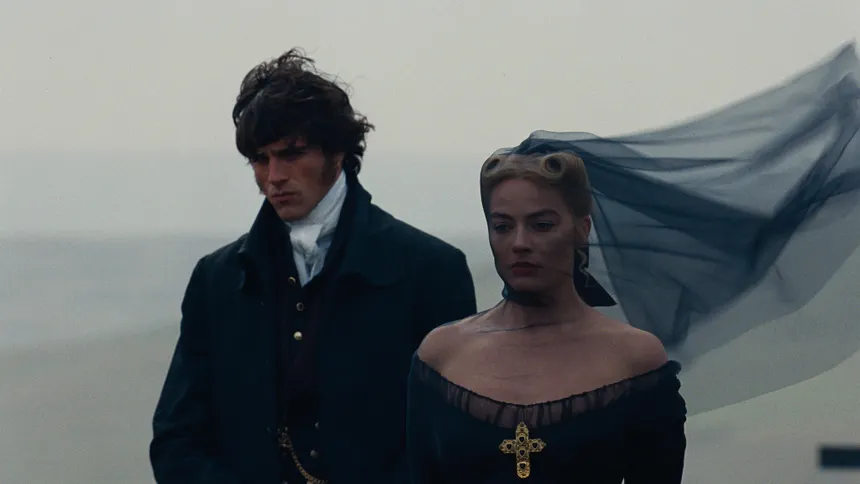
What the film chooses to give us instead is a thirty-something Margot Robbie acting like a spoiled kid. Her character is not very nice in the book, so had the casting been age-appropriate, it would have been acceptable. But an adult woman throwing tantrums is strange and annoying to watch.
Jacob Elordi as Heathcliff
On the other side, we have Jacob Elordi, who was cast with the sole purpose of getting a ton of women who want to see him shirtless to pay for a ticket. Here, aside from the age of the actor, there is another problem that many people online highlighted: the movie did not consider the physical appearance of the character at the time of casting. In the book, Heathcliff having dark skin is mentioned on several occasions.
It is funny to think that most people who were outraged by the change were completely okay with Halle Bailey playing Ariel in The Little Mermaid or the “documentary” that portrays Cleopatra as black. Their anger is quite selective. After years of doing the same, we should all admit that basing your hiring processes on quotas has done more harm than good.
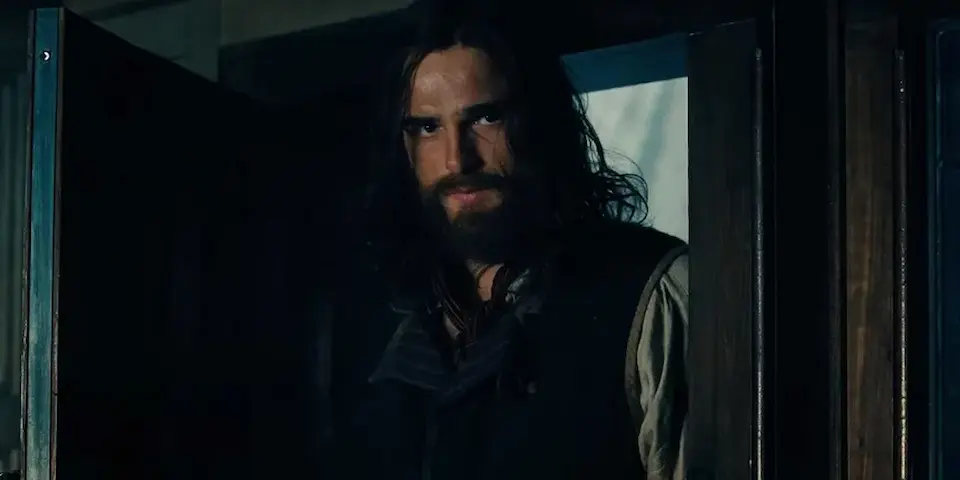
However, in this case, I have to agree that Heathcliff’s skin color was relevant to the story. Far from being a mere detail, it affects the way the character is treated by others in his childhood and youth, for example, by Hareton, Catherine’s brother. This is what fuels his desire to take revenge on Earnshaw’s family. And by the way, Hareton, in spite of being an important character, does not exist in the film.
But of course, Jacob Elordi will attract more women to the theater. That is what matters. In Hollywood the anxiety about lack of representation vanishes as soon as it is not convenient.
Characters Are Not The Same
Margot Robbie and Jacob Elordi are two actors I don’t like at all. I cannot understand what it is that makes them such favorites with audiences. Nonetheless, I think my opinion is unbiased when I say that “Wuthering Heights” features some of the worst acting of their entire careers. And, yes, for Elordi that includes the entire Kissing Booth franchise.
These two have no chemistry and display no individual charisma either. Wuthering Heights characters were not written to be likable, but they are interesting. Robbie and Elordi did not manage to bring that on screen.
Nelly, the person from whom we hear most of the family’s story in the book, is somehow turned into a villain that wants to keep Catherine and Heathcliff apart. And she is Asian now; don’t ask me why. Joseph, another of the Ernshaws’ servants, is also changed beyond recognition. Maybe one of the most outrageous changes is what was done with the character of Isabella Linton, but we will go into that later on.
Sex Sells, and Hollywood Knows It
Modern adaptations are never complete without a share of gratuitous sexualization. The book has passion and violence as main topics, but it never touches on sex in any explicit way. That did not stop Mrs. Fennell from introducing BDSM elements into the characters’ relationships.
And here I would like to direct our attention to two aspects of this matter.
Firstly, why anyone would feel the need to insert sexually explicit elements into a story has nothing to do with that (a 19th-century classic, nonetheless) is beyond comprehension. Aside from just being disrespectful and cheap, it also shows a complete (and intentional) lack of understanding of the novel’s themes and characters. This film takes a story about revenge and family trauma that comprises generations to a twisted extramarital affair with no depth.
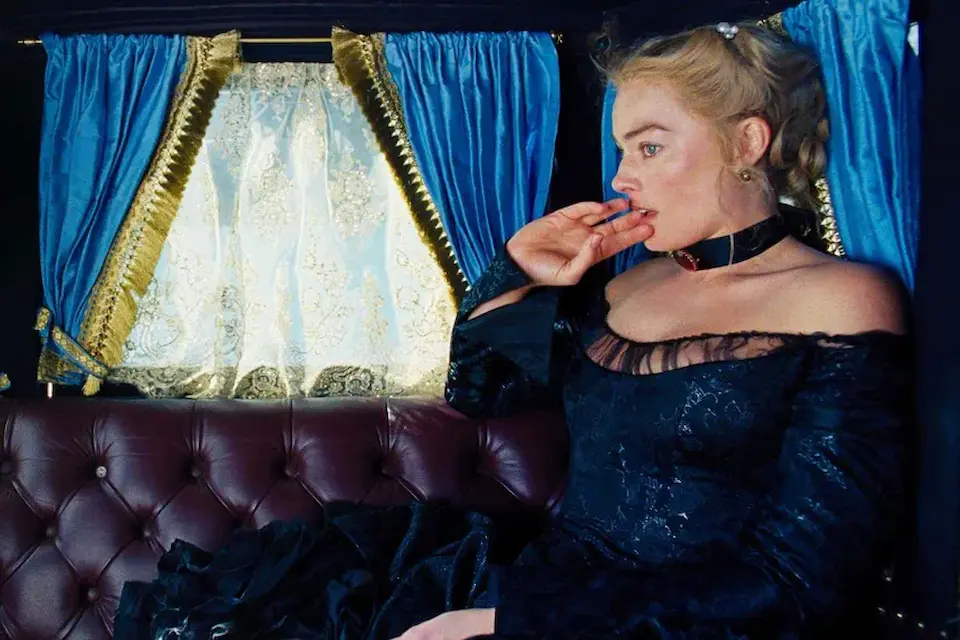
And to be clear as to the extent of the changes, in the novel Catherine and Heathcliff’s love never becomes a relationship; they never get to be together. Catherine dies halfway through the book, and the family drama does not get resolved, dripping onto the next generation. The affair this movie shows us is fabricated.
Fennell herself admits that her film is built based on how “she experienced the novel,” which she read for the first time at age fourteen. A fancy expression to say that she recreated her own fanfiction. I would say that, especially for a girl of fourteen, connecting Wuthering Heights with BDSM is a bit of a stretch.
Eroticism vs. Pornography: A Failed Artistic Vision
The second thing we should be paying attention to is how modern filmmakers are trying to sell us perversion through “eroticism”. To my understanding, eroticism is supposed to represent sex in an artistic way, with certain aesthetic criteria. It is more about suggesting than about showing. If you go too explicit, then you are filming a completely different genre. Hollywood can call it “high art” all they want, but that’s what it is.
However, I’ve noticed that many of these romantic/erotic movies made for women have fallen into a strange limbo lately. “Wuthering Heights” trailers and general promotion teased a raw and explicit film. They even had Margot Robbie and Jacob Elordi pretending to feel mutually attracted, in a pathetic attempt to create drama and sexual tension.
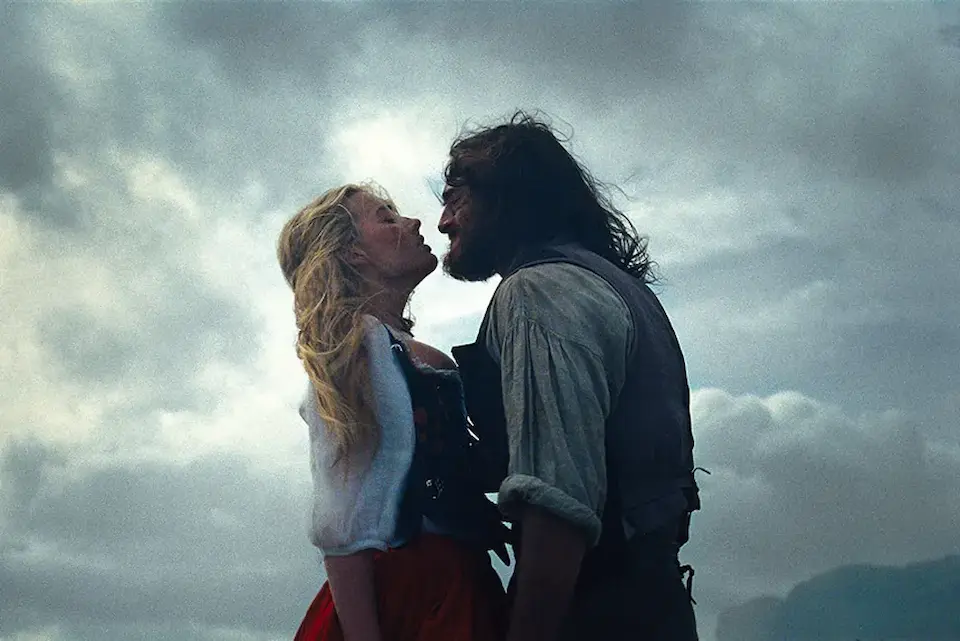
But when you actually watch the movie, those things are nowhere to be found. Fennell purposely presents us with suggestive imagery, but the perverseness and sheer vulgarity of those elements show that they obey no artistic vision whatsoever but rather reveal a strong desire to shock the audience. And the lack of taste of the director, of course. Despite all of this, there is no nudity in the film, and the sex scenes are quite boring.
So essentially, the content is way too crude and vulgar to be erotic but way too tame to be pornographic; everything is very half-ass. Combine this with an uneventful story, and you have the formula for whatever it is studios are trying to feed us right now.
What Happened to Isabella?
This was where the movie really lost the plot. Everything else is a freak show, but this is particularly appalling.
Isabella is Edgar Linton’s younger sister, a character that is portrayed as naive in the book. She tries to be friends with Catherine, besides her wayward temper, and her inexperience makes her fall in love with Heathcliff, even though she knows he is not a good man. As a way to hurt Catherine, Heathcliff convinces Isabella to elope with him, after which he starts treating her with cruelty, abusing her both verbally and physically. She manages to escape him, while pregnant, to raise the child on her own. But that marriage is a decision Isabella deeply regrets, not only for the treatment she has to endure but also because it forces her to cut ties with her family forever.
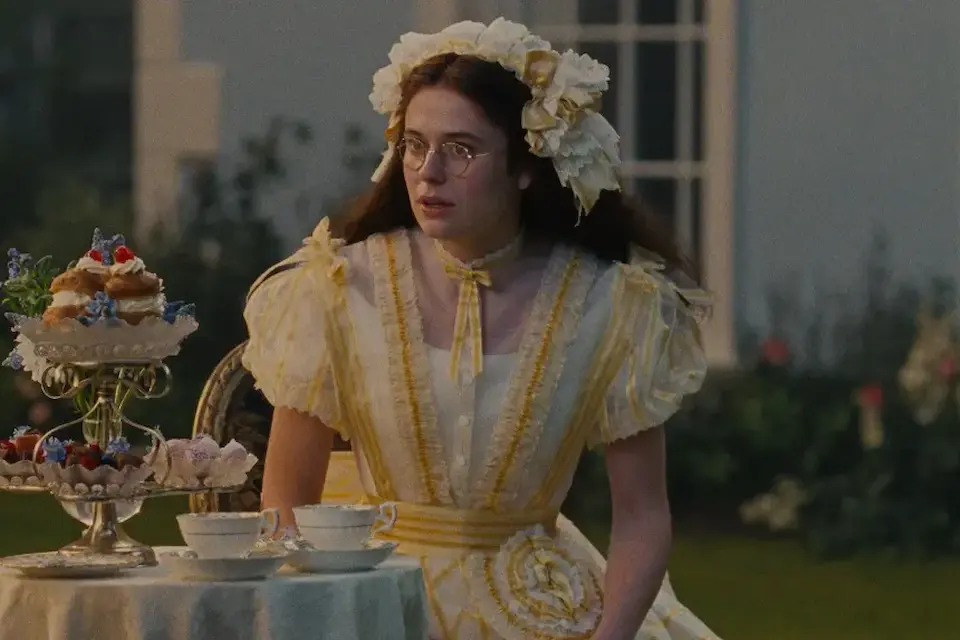
In the movie, Isabella is Edgar’s ward instead of his sister. This time around, the character is given an unsettling personality and a weird obsession with Catherine. As in the book, she elopes with Heathcliff. But instead of depicting the situation of domestic abuse, the film decides to turn the relationship into a BDSM dynamic, where Isabella is treated like an animal, but she enjoys it. She does not care that she is being used to take revenge on both Catherine and Edgar; she even takes pleasure in being instrumental. The scenes where Isabella is treated like a dog and kept collared in a corner of the dirty kitchen are some of the most tasteless I have watched in a while.
Why would you conceive this idea in the first place if you read the book? Why would you turn a storyline about violence and abuse into something “sexy”? This urge to romanticize dangerous behaviors and present them as a common “female fantasy”, has been getting out of hand for a while now.
Music and Production Design
Pop singer Charli XCX being part of the music of the film was a fact heavily publicized, so I was half expecting to hear pop songs throughout the entire period drama. Luckily, this was not the case. In fact, the soundtrack was made by composer Anthony Willis, and Charli XCX released a separate album of original songs.
The costume design, on the other hand, was a disaster. I understand the idea of relinquishing some historical accuracy to give a film a distinct visual style. In this particular case, however, the actors (especially Margot Robbie) look like they are about to hit a Halloween party.
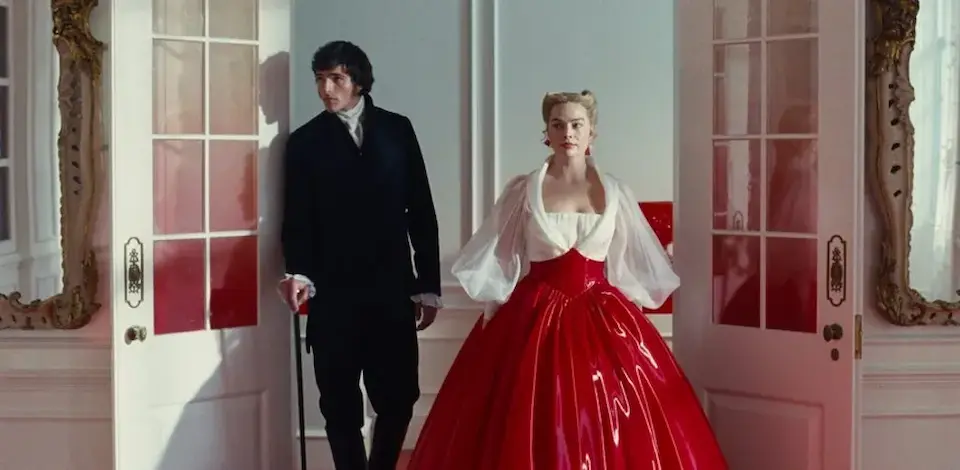
I’m not sure if they picked fabrics of poor quality for the costumes or if they made a mistake with the lighting of the sets. But all items of clothing worn in the film look cheap. Even the jewelry looks made of plastic. Makeup and hairstyles also go for an “almost modern” style, which includes scenes where Robbie is wearing those little face crystals beauty influencers keep obsessing over. It was like a two-hour episode of Euphoria.
Box Office Performance
In spite of everything, “Wuthering Heights” ended its run in cinemas with a worldwide box office of $241,701,072 according to The Numbers. The reported budget for the film was $80,000,000 (plus whatever amount was spent on marketing). Relying only on the official numbers, the movie managed to break even and maybe turn a little profit.
The audience’s reception was mixed, which slightly revived my faith in humanity, but the fact that such a film could be consumed as “a romance” by so many is something to worry about.
And who are the people watching the film? The answer is pretty obvious: women. And not just any women, but the same ones responsible for the record sales of books that play with similar themes and aesthetics.
Ladies, We Need to Look Inwards
It is a sad truth that despite feminism’s talk that women are better equipped than men to lead and take the reins of the social and cultural landscape, reality is proving otherwise. The fact that we women represent a huge (and very lucrative) target demographic in both the entertainment and editorial worlds has not driven us to demand higher quality books and movies. In fact, we are eagerly accepting products that are poorly made and carry terrible messages disguised behind terms like “empowerment” or “female pleasure”.
We have lost two fundamental things: respect for our elders and their work (there is a reason why Emily Brontë’s prose is still being read) and judgment to tell the good from the bad.
As long as we continue to passively accept these products, Hollywood will have no incentive to do better. I think it is time to reflect on our media habits and decide what kind of behaviors we allow to become a norm. We are what we consume, and that is a fact. An uncomfortable one, but a fact nonetheless.