Falling in Love With The Villain: “You, Me & Tuscany” and “Finding Emily”
Romcoms have been on life support for years, and films such as these make me think we should just let them go for good. Join me on this sad journey to visit some of the recent offenders: You, Me & Tuscany and Finding Emily.
We should admit it: modern romance is broken. Or at least, this twisted thing that the entertainment industry wants to sell as romance is.
In the last two and a half years reviewing all types of films, I’ve been tirelessly trying to find a romantic comedy that is not mediocre and/or morally corrupt, with no success. It seems like we are incapable of producing those anymore. The idea of the “feel good” type of romance, which follows two people actually falling in love (not just sleeping together), has become all but extinct.
But as I’m nothing if not stubborn, I’m far from abandoning my search, which last week led me to two examples of the dreaded “modern romcom” released during the first half of 2026: You, Me & Tuscany and Finding Emily.
You, Me & Tuscany
The film revolves around Anna, a young aspiring chef, who is trying to get her life together after her mother’s passing. After losing yet another job, she meets Matteo Costa, an Italian man with whom she shares a night of fun. He tells her about the villa he owns, and his strained relationship with his family.
On a whim, Anna decides to spend her scarce money on a trip to Italy, to fulfill her mom’s dream. But as soon as she arrives in Tuscany, she learns that every hotel is fully booked because of a local festival. Anna’s solution is to find Matteo’s villa and let herself in. The next morning, Matteo’s mother and grandmother walk into the house, and to avoid being arrested, Anna pretends to be his fiancée.
Before she knows what is going on, Anna is introduced to the entire family, including Matteo’s good-looking cousin Michael.
Finding Emily
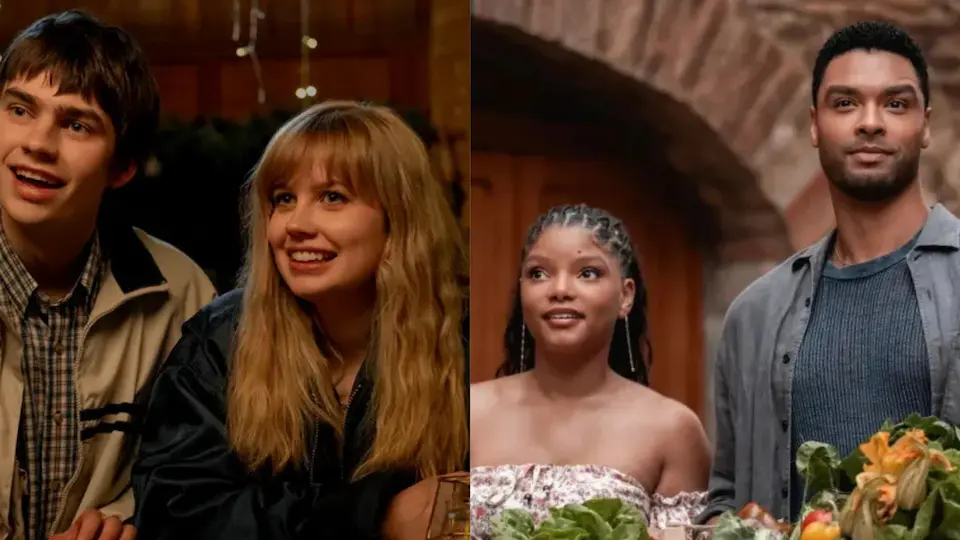
Owen, a sound engineer working at a student union bar, falls in love with a girl he meets there. Before leaving, she agrees to give Owen her number and tells him her name is Emily. However, when he tries to call her the next day, he realizes a digit is missing.
Unwilling to let go of her, he starts a search through the campus, where he meets a psychology student (also named Emily) who offers to help him. New Emily has some hidden motives: she has a thesis to write, and Owen seems like a great research subject to prove her ideas about love.
Of course, things complicate when they start to have feelings for each other.
Being a Bad Person is Romantic
Reviewing this genre has become quite boring because it seems to be creatively stuck. So the script mistakes that I tend to point out are repeated over and over again: no organic character development or clear emotional arcs, supporting characters that are just decoration, and low-IQ humor—all your usuals.
More than a year ago, I wrote an article about two romcoms that were released on streaming: A Family Affair and The Idea of You. In that particular piece, I identified two recurring topics of modern romantic movies in general: the older woman/younger man and the infantilization of adult women.
This time, I found another common element: female protagonists being complete sociopaths but presented as “quirky and relatable.” The last ten years have been full of the famous Mary Sue-type characters, those who need no men and are incredible at everything without trying. This is different and maybe more jarring, because in a romantic film, they need to fall in love and have someone fall in love with them. These modern protagonists are not only cynical and irresponsible but also completely selfish and heartless.
Anna, The Chef
You, Me & Tuscany was released in theaters in April, but it’s the kind of film Netflix has done at least a million times. More than a story about two people falling in love, it is a commercial for Tuscany. And don’t get me wrong, the locations are beautiful, but if you take that away, what do you have left? Not much.
The protagonist has the personality of the regular wannabe influencer. She is selfish, self-centered, and financially irresponsible, but the film tries very hard to present her as “quirky” and innocent. When Anna is introduced at the beginning of the movie, we are shown that she is working as a “house sitter” but is fired because she uses her employer’s possessions without restriction, going as far as to wear her lingerie. She also continually imposes on her best friend, who is pregnant, by showing up at her job and asking for favors.
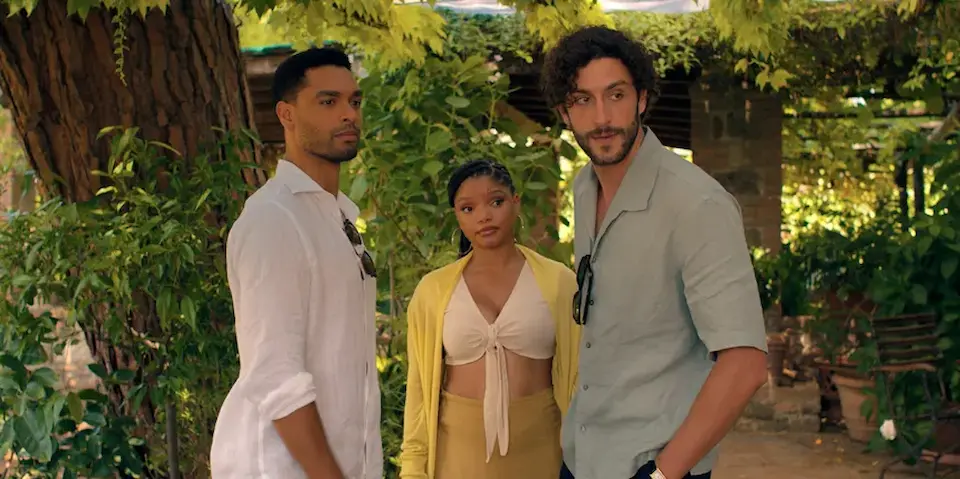
After meeting Matteo, she randomly decides to spend her last $500 on a trip to Italy, even though she is broke and has nowhere to live. Once there, not only does she invade a stranger’s private property and impersonate his fiancée, but she also plays with his family’s feelings by giving them hope that Matteo is coming back to live close to them. While doing all of that, she still finds time to openly flirt with Matteo’s cousin, Michael, which is the main “romance” of the film.
Anna is a terrible person, but does the writer make her experience any consequence for her actions? Of course not! All of Matteo’s family is okay with her being a liar; they encourage her to continue her romance with Michael and hire her to work at their restaurant. The end.
Halle Bailey and Regé-Jean Page are not terrible in their respective roles, but just like the movie, their performances are generic: every other actor would have done the exact same. The same happens with the side characters; they have no distinct quality besides the typical clichés of the genre.
Emily, The Psychologist
I was initially quite interested to watch Finding Emily, as the reviews seemed to be pretty positive. In fact, for the first fifteen minutes or so, I thought I was watching something superior, mostly because it didn’t have the ultra-bright and depressing TV commercial lighting. But the surface of the product was the only thing that put this film above Netflix crap.
Once again, we have a female protagonist who is a horrible person but gets away with it. And in this case, it’s even worse than You, Me & Tuscany. Emily Raine is a villain through and through.
For starters, Emily offers to help Owen just to use him for her research, something she never discloses to him. To make sure her test subject does not contradict her hypothesis, she pushes the poor guy to do things that will bring him nothing but trouble: she has Owen send a fishy email to every single Emily on campus, even though she knows that contact information is private; she makes him “infiltrate” a private house party; and she does not stop him from going to a podcast to discuss the situation (a.k.a. getting cornered by a lot of angry women).
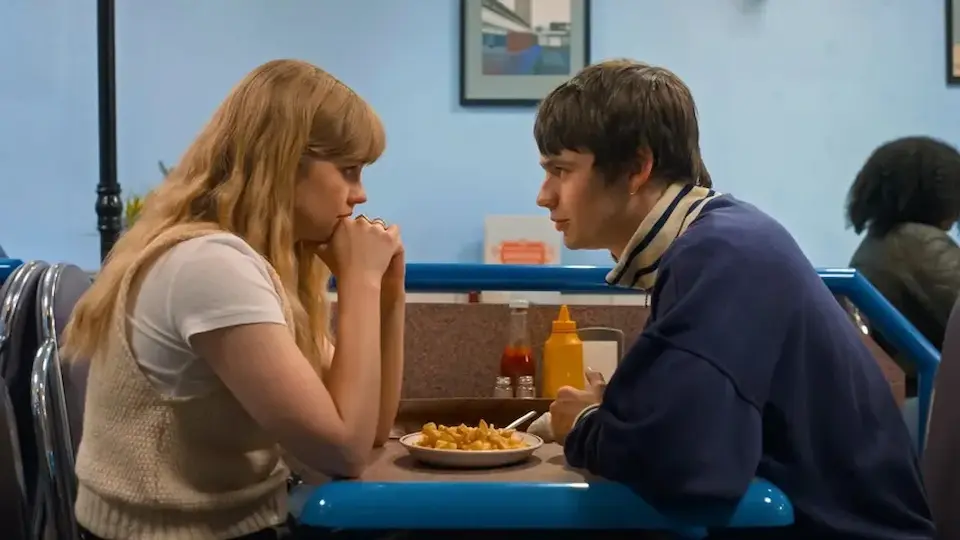
As a result of all of this, Owen is considered a danger to the students and loses his job. And of course, he is recognized everywhere as “Email Guy” and publicly ridiculed every time he sets foot out of his house.
In the meantime, Emily starts to fall for Owen, and the two become closer. At least, until he figures out what Emily had been doing all that time: at her apartment he finds a board full of information, pictures of him, and even recordings of conversations they had.
Oh, but she is just a victim! So the film chooses to close with Emily talking about her feelings for Owen in front of everyone attending her thesis presentation. A grand gesture, you know. And after a very insincere apology, she is forgiven by Owen, and they get together.
A Consequence Or a Symptom?
I have the feeling the situation is getting worse with every passing year. Not only are romcom scripts incapable of capturing the process of falling in love (something that we can partly blame on incompetent writing), but now they are also incapable of having characters that know how to be decent human beings.
It could be argued that plenty of romcoms over the years have presented terrible characters and behaviors as romantic or aspirational. However, these examples did not represent the entirety of the genre back in the 90s or 2000s. Now, there’s nothing else to choose from.
Aside from every other aspect where these scripts fail, the key element that is missing from romantic comedies these days is simple: vulnerability. Female characters are no longer allowed to be flawed, to learn from their mistakes. They are not designed to change or grow because, according to the writers, they are already perfect. Even if they are actually bitches.
What does this mean? That the main problem is not technical, but human.
I would love to blame this one on radical feminism, but I think the issue runs deeper, and these two movies have made me curious to understand how we got here. Maybe if this can be figured out, it can also be fixed eventually.
Expect to hear more on the subject in the next few months.