Nostalgia, Technology, and Bad Parenting in “Toy Story 5”
Disney absolutely insists on expanding a story that ended in 2010. Here are my impressions on the fifth installment of the Toy Story franchise.
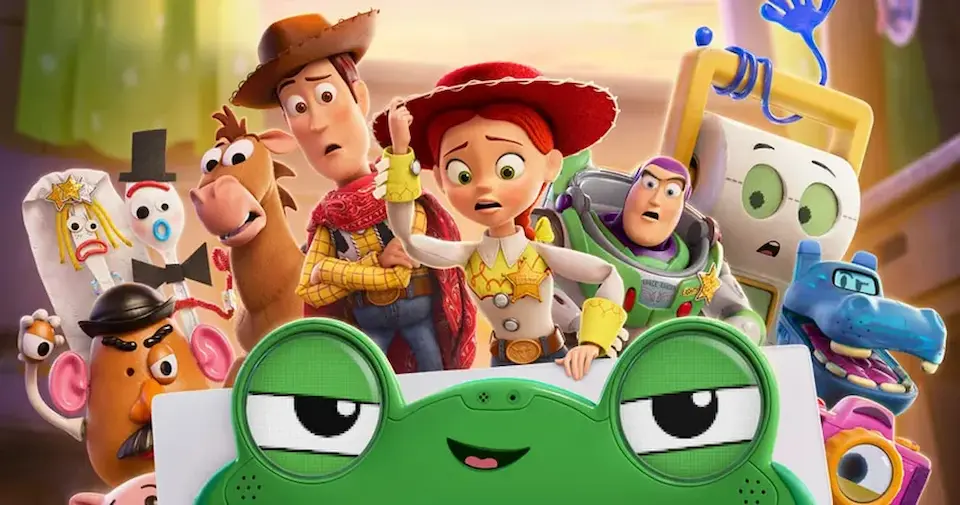
If we made a list of IPs that Disney just refuses to let die, Toy Story would make it to the top ten. Started in 1995 and followed by two excellent sequels in 1999 and 2010, the story of Buzz, Woody, and the rest of the toy gang was a staple of 90s and 2000s childhoods. The following decade, marked by the trend of “sequels at any cost,” brought the unnecessary (but highly profitable) Toy Story 4 to our screens. And then there was Lightyear in 2022, but we don’t talk about that one.
Sadly, Hollywood is not done. That is why last week I forced myself to watch the newest installment of the franchise, and I have a lot of thoughts.
What is Toy Story 5 About?
Jessie and the rest of Bonnie’s toys have to face a new challenge: the arrival of technology in their owner’s life.
This danger comes in the form of Lilypad, a tablet device that soon takes over all of Bonnie’s time, making her forget all of her once-beloved toys.
Cheap Nostalgia For The Adult Customer
Toy Story 5 is a movie that, like many sequels of amazing projects these days, relies mostly on referencing better times. To be sure, it’s not nearly as bad as other sequels on the market, but it’s below the original trilogy’s level.
The reasons for this are many, starting with the fact that Toy Story 3 had the narrative and emotional weight of a definitive ending. That cannot be either undone or redone. From the fourth installment on, the franchise feels redundant because all the key topics and character arcs were already closed. So now we are sending characters to re-learn the same lessons and arrive at the same conclusions they did more than a decade ago. I know Toy Story 4 was a success back in 2019, but I could not care less about Bo Peep being an empowered lady or Forky’s shenanigans. Narratively, they add nothing interesting.
Jessie, The New Star
However, female empowerment must be part of every film, so the fifth installment chooses Jessie as the new protagonist and relegates Buzz and Woody to supporting roles. And now they are both dumber so women can shine. Most of Buzz’s storyline consists of being nervous about proposing to Jessie and making a fool of himself in the process, while Woody makes a glorified cameo, showing that he is becoming bald, and has also “gained weight.” I don’t know how, because he is a toy, but alright. I guess the writers thought it would be funny.
So in short, the heart of the franchise, that is, Woody and Buzz working together, has now been relegated to a storyline that runs in the background. There is also a very odd storyline in which a bunch of modern Buzz Lightyears are trying to return to Star Command, which will later be used as a plot device to solve one of the group’s problems.
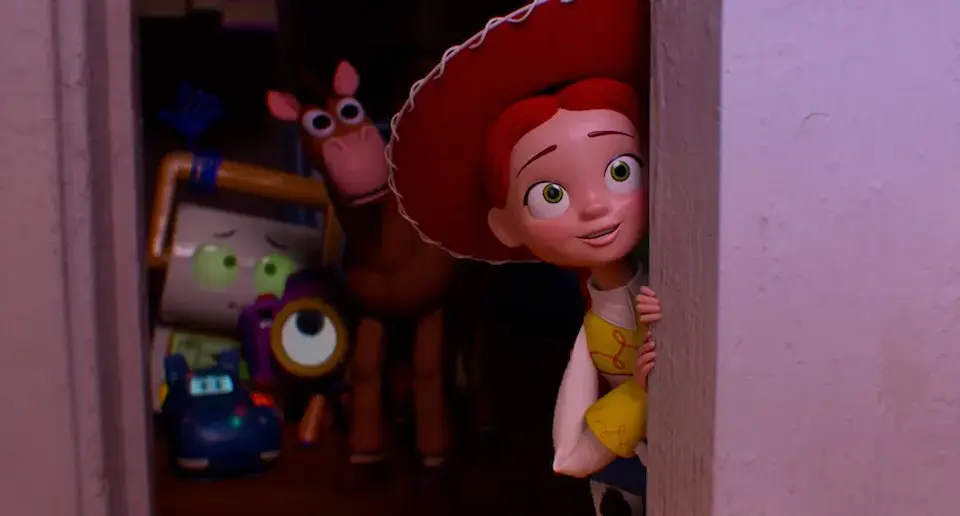
The film also tries to bank on Jessie’s memorable abandonment story from Toy Story 2. Close to the end, there is a scene where Jessie finds a box buried under the tree where she used to play with Emily. Inside it, there are some toys and pictures that reveal that Emily named her daughter after Jessie. And we have an emotional full circle moment, where Jessie resolves the same trauma she resolved back in 1999. Why is the box even there? I have no idea.
I also have the feeling the animation has become way too perfect for its own good. The toys don’t even look like toys anymore; they look like normal cartoons. Maybe this was an issue with Toy Story 4 as well, but I don’t remember noticing it as strongly. If we go back to the first two movies, the animation seems to have more texture and the colors seem warmer.
Technology Shortening Childhoods
On paper, the topic of this new installment is brilliant: an exploration of how the rise of technology and the kids having internet access so early in their lives has changed the way they interact with toys.
The main conflict in the original trilogy is the fact that kids grow up, and they eventually stop playing. In current times the issue is even more complicated: kids stop playing way too early because they are handed an iPad or a cellphone before they reach elementary school. Most Gen Alpha kids have not spent a single day of their lives without the stimulus of a screen, and the consequences of that are a pretty interesting theme for the franchise to approach.
However, I feel Toy Story 5 wasted this important idea on a film that does not go as far as it should and whose plot wavers for the entire run time.
The Alleged Villain: Lilypad
The fifth installment introduces a new villain, Lilypad, a tablet that is gifted to Bonnie so she can “fit in” and make friends. Obviously, she is quick to monopolize all the girl’s attention and convince her that she is missing out on making friends if she is not connected 24/7.
To me, the first mistake was making the tablet sentient. I know it’s a kids movie, and it was more fun that way, but technology has no feelings; it’s 100% dependent on the user. Yes, the toys are as well, but they are not algorithm-driven.
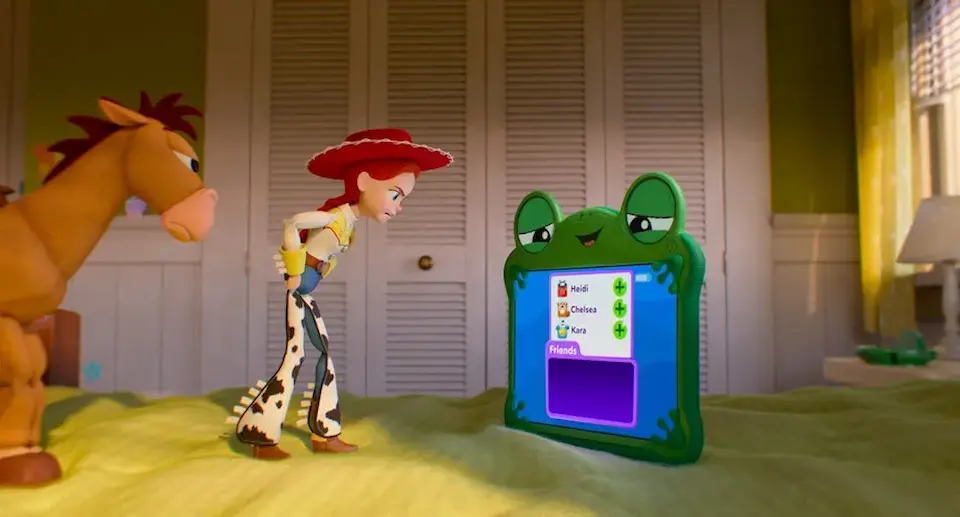
The film tries to give Lily what I call “the Anxiety arc”: she was doing bad things, but only because she wanted the best for her kid. In Inside Out 2, Anxiety is a necessary emotion for Riley. Anxiety can keep you from doing stupid things, but in large doses, it can make your life a living hell. In the context of the film, Anxiety not realizing she was hurting Riley makes sense for the story. Here there is no explanation that can support Lily’s guilt. The script just does not want to make her completely bad, so then they can sell you a Lilypad-inspired case as merchandising for your child’s tablet.
The Real Villains: The Parents
I have a hot take: technology is not bad; most parents are just idiots. Nothing justifies handing a child younger than fifteen any device with internet access without supervision. And even in their teens, you have to be on your guard.
Not only does Bonnie not have any screen time limitations, but she is also allowed to use Lilypad’s “social media” with no supervision. At eight years old.
Both parents are completely passive throughout the whole film, and it takes their kid to be in tears for them to even check who she is talking to on the device. Bonnie being made fun of by three girls her own age is not the worst possible outcome. The Internet is a dangerous place.
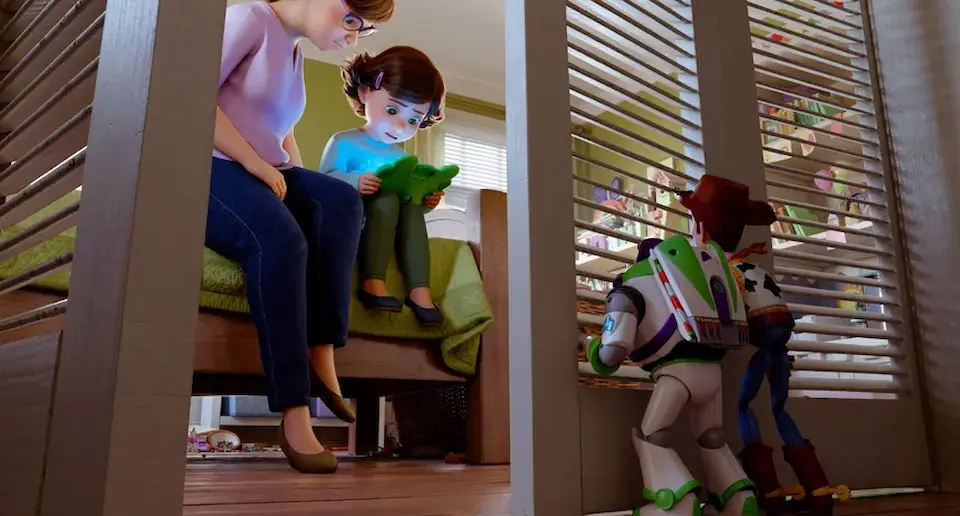
Some reviews I read tried to market Toy Story 5 as a “wake-up call” to parents, to show them how growing up surrounded by technology is affecting their kids. However, the story makes no effort to point at Bonnie’s parents for giving her the tablet in the first place. They are portrayed as well-intentioned people who did what every other parent would do and were completely powerless in the situation. But they had power: the power of not giving their kid the tablet! Or at the very least, limit its use.
The mom tells Bonnie that a true friend would “love her as she is” in a manufactured emotional moment. A little contradictory, while she herself got Bonnie the tablet to make her fit in. And I think this is the real problem: parents using technology to not deal with the parts of parenting that make them uncomfortable. To not deal with tantrums, noise, questions, or their kids’ emotional needs. This, added to Lilypad having a “redemption arc,” renders the whole message completely useless.
The movie ends with Bonnie making a friend who also enjoys playing with toys, and so we can have a manipulative happy ending, even though neither Bonnie nor the parents have learned a single thing.
I understand that Toy Story is for kids who are not going to analyze the plot in detail. But this is not a Minions movie, built around dumb fun. Toy Story is a franchise that has given us beautiful and heartfelt moments, with great storytelling and characters, and we should demand way more from it. These last two installments are a clear downgrade.
Box Office Numbers
Of course it did well in theaters. It would be rare for it to happen otherwise. Toy Story as a franchise has not been as overexploited as to repel audiences. Yet.
With three weekends in theaters, Toy Story 5 has grossed $776,011,973 worldwide. The Numbers reports a $250,000,000 budget, but I’ve read speculations that the number is higher. If we believe the first source, the movie has already broken even. Whether it will turn a huge profit or not, that is another question entirely. Toy Story 4 made $1,071,177,215 during its theater run in 2019 (without adjusting for inflation), but on a lower budget.
I still believe reaching its predecessor is not unthinkable for the fifth installment, which dominated the domestic box office its first two weekends, but the arrival of Minions & Monsters, even with its disappointing opening weekend, has stolen the first place.
At this point, I’m almost sure that when I have my own kids, the only movies I will be able to take them to will be Toy Story 9, Frozen 5, Despicable Me 12, and Moana 4. And maybe by then Lilo & Stitch will have a third live-action out too. I’m getting depressed just thinking about it.
To sum up, if you have children, remember technology cannot raise them for you. They are your responsibility. And for God’s sake, don’t get them a Lilypad tablet case!