“The Devil Wears Prada 2”: The Triumph of Superficiality
A sequel to the beloved 2000s film, The Devil Wears Prada 2 takes us back to Runway twenty years later. Was this a story worth reviving? Let’s find out.
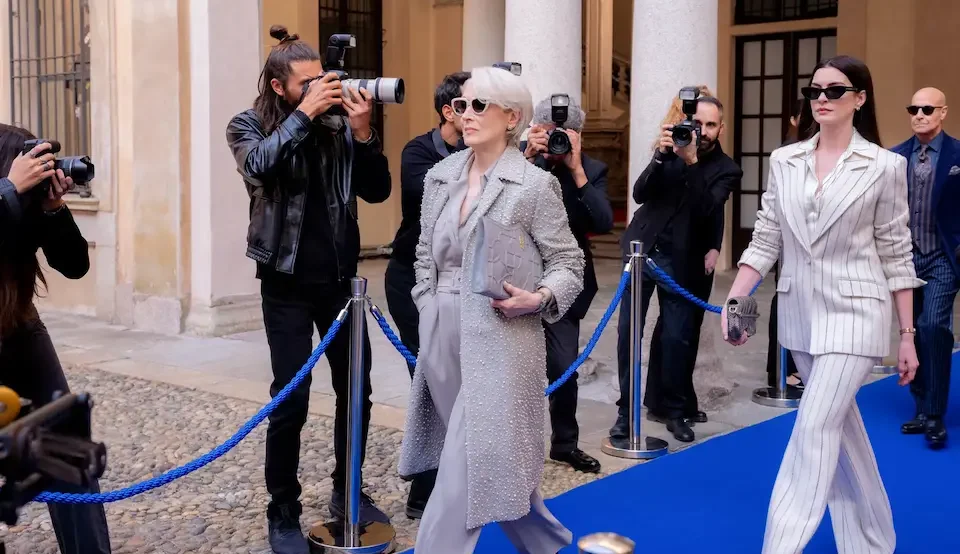
After years pining after the 1980s, trends have at last reached the good old 2000s. To my dismay, low-rise and impractical belts are back, but worry not, for not everything is lost. The new 2000s fever has brought on some good things as well, like the interest in owning physical media again and the wave of appreciation for movies that came out during that time. I believe that we 90s and 2000s kids are just now collectively realizing what amazing decades those were for cinema and entertainment. And one of those “vintage” jewels is, no doubt, The Devil Wears Prada.
Released in 2006, the story of a young aspiring journalist, a fish out of water in the fashion industry struggling with her mean boss, has become a sort of classic of that era. It has memorable characters, memorable music, and a fashion sense that many modern movies would kill for.
And you know Hollywood: always willing to stick some leftovers from a success and microwave them in hopes of making them edible. The sequel was inevitable.
What is The Devil Wears Prada 2 About?
It’s 2026, and Runway magazine, a former fashion empire, is now struggling to adapt to the digital era. A PR crisis prompts the owner of Elias-Clarke, Runway’s parent company, to hire journalist Andy Sacks as features editor after a video of her receiving an award goes viral.
Having recently been laid off, Andy takes the opportunity and goes back to work for her nemesis, Miranda Priestly. A very convenient opportunity for the main cast of the original film to get back together.
From then on, we follow the characters’ shenanigans as they try to save the magazine, protect Miranda’s job, get an important interview, solve their traumas, and talk about the importance of journalism. Yes, the film has no idea what it is talking about.
But wait, because there is more.
Characters That Never Grow Up
When Andy arrives at Runway magazine at the beginning of the sequel, it has been twenty years since she left her position there. In the meantime she has done great work as a “serious” journalist. We know this because the first few scenes of the film show her receiving an award for that outstanding work. One would think that that kind of experience and success would have turned Andy into a more confident and well-rounded person who knows how to move in the corporate world.
However, the minute she steps into Runway and sees Miranda again, Andy is back to her twenty-something, inexperienced, and desperate self. To the point that her main goal is not doing the job she was hired to do. That actually becomes just a tool to achieve her real goal: get Miranda’s approval. It’s so pathetic that the script has to make other characters constantly say out loud that Andy “looks so confident” or has “become so confident”, when it is obviously not true.
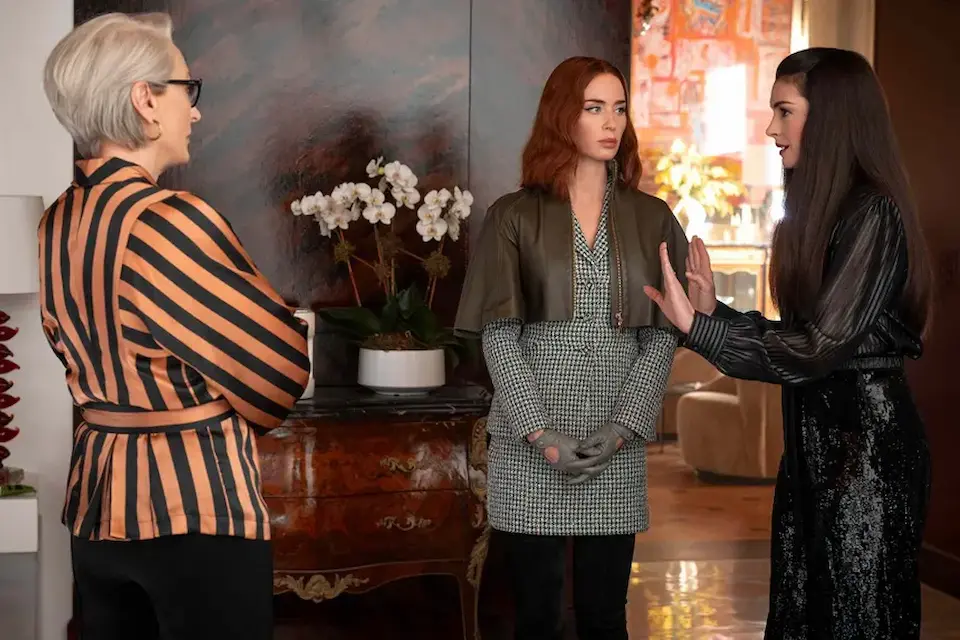
This also stains Emily’s character, who now has an important position at Dior but is still incapable of getting over Miranda. In the original movie, Emily was mean to Andy most of the time, but she was not an inherently evil person. She was desperate to grow in the fashion world, and she knew that she had to play the game if she wanted to get opportunities. While that does not justify her, it does earn the audience’s sympathy. Emily Blunt’s charisma was the icing on the cake.
The Devil Wears Prada 2 turns Emily into a cartoon villain, who is back for revenge but has a lot of stupid evil plans. Any quality that made her likable disappeared.
Deconstructing a Villain: The Miranda Problem
Gone is the ruthless Miranda Priestly of the first The Devil Wears Prada. That larger-than-life figure, intimidating everyone around her, has become a shadow of her former self. Just like Emily, she is now a cartoon villain, yet somehow, she is also a victim of the system.
As times have changed, it wouldn’t be politically correct for Miranda to bully her employees. They took it so far as to give her an assistant/babysitter, who interrupts her every time she is about to say something that could get her canceled.
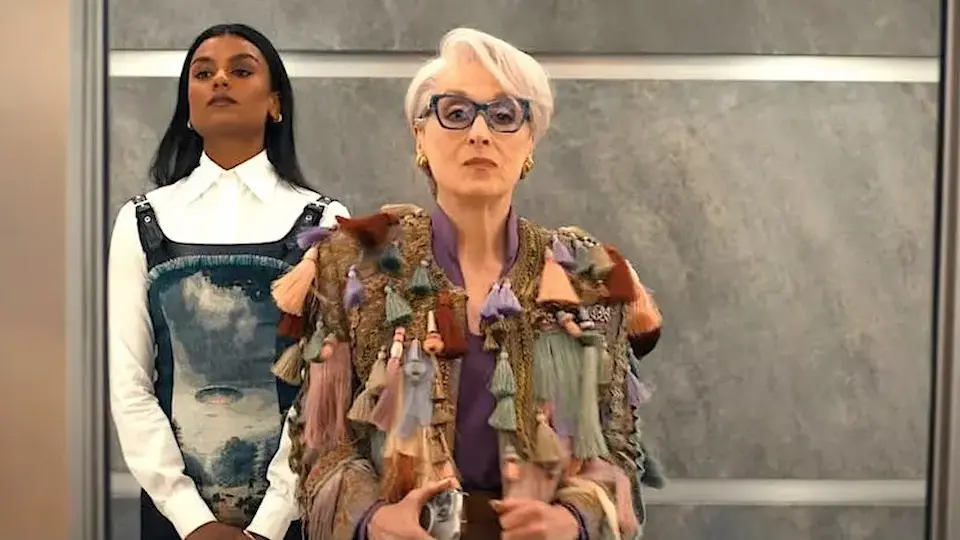
Her main storyline is that she wants to be promoted to global head of content of Elias-Clarke. The recent controversies involving the magazine, followed by the sudden change in management of the company, put the promotion in jeopardy. So now she is softer; she has to lower her head and obey. A poor attempt to “humanize” her.
In the first place, the original movie already showed us a bit of Miranda’s vulnerable side (her family life was chaotic because she was a workaholic). But also, she has no reason to want that promotion. She does not like the new digital-driven environment and would not be a good fit for it. They make it feel like Runway can put her on the street, when the woman is a huge public personality and clearly has a lot of money. It’s not a life or death situation.
The biggest crime was trying to give her a sort of redemption arc: the death sentence to every charismatic villain ever. Ask the Joker how that worked out for him.
The Sad Destiny of Female Characters in Hollywood
As a good corporate feminist, Andy is 100% dedicated to her career. She never got married and had her eggs frozen. In the middle of the film, she gets the required love interest, a peaceful guy that never contradicts her and is willing to wait for her attention for as long as she wants. His participation in the story is so mild and unimportant that it is not worth commenting more about.
Emily is divorced, has a terrible relationship with her ex-husband, and has two kids that she never sees because her work at Dior is more important. She is in search of a rich man who can finance her lavish lifestyle.
As for Miranda, she has another unthreatening random man to keep her company. He is unimportant as well.
God forbid someone looks even remotely “tradicional”.
Media in the Digital Era
The change from print to digital media has been a huge deal this past decade. We could almost consider it the modern “silent-films-to-talkies” moment of many types of media. And not doing something interesting with it is one of the biggest missed opportunities of The Devil Wears Prada 2.
The main problem the entertainment industry (as well as legacy media) has when adressing this particular cultural switch is very simple: the lack of intellectual honesty. It may be because the switch is still in process, but instead of approaching the subject as what it is, a change in consumer preferences, they want someone to blame for their fading relevance. And the options are usually two: the evil corporations or you, the consumer.
I remember writing the same thing when Civil War came out two years ago. Legacy media, as well as journalism as a profession, are still stuck in an alternate reality where they believe their audience should listen to them passively, as they used to. They need to snap out of it if they want to survive.
So frankly, these attempts to make us side with the poor journalists are void. Andy’s rant about how terrible and dangerous it is for the “most important profession” to be left without a voice is extremely irritating. They are losing their jobs because people don’t want to consume their work. That’s it.
Hollywood Runs on “Vibes” Now
Aside from the successful attempts to ruin every character, The Devil Wears Prada 2 does not have much more to say for itself: nothing distinguishes it visually, neither production- nor fashion-wise. I was not expecting much, but the lack of identity of the production was stiking; after all, it had the same director and screenwriter as the original.
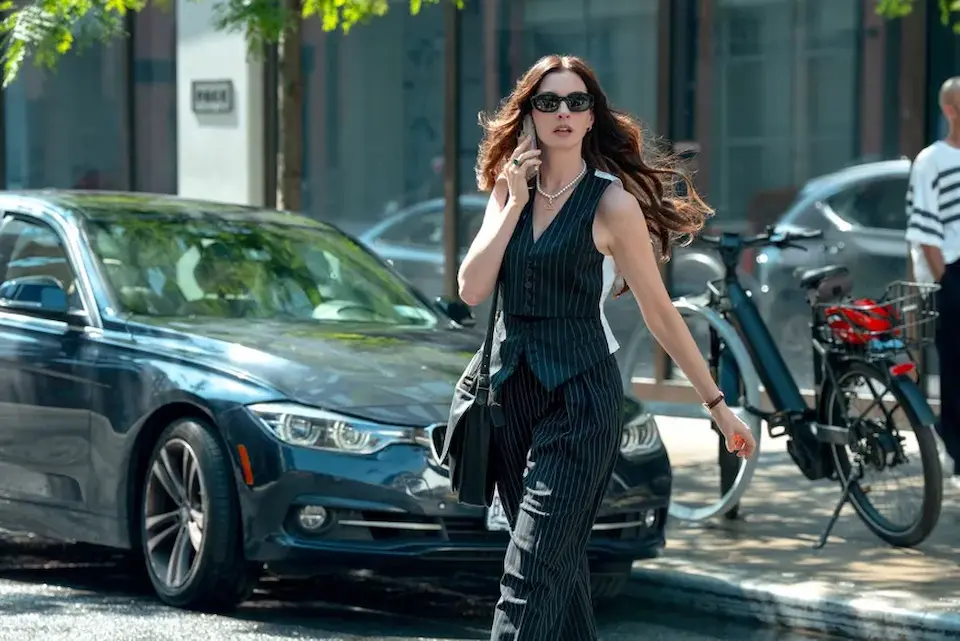
Andy walking through New York with her beautiful outfits, either carrying coffees or talking on the phone, is the most distinctive memory I have from the first film. It made you yearn to live a glamorous life in the city. The new movie has a very underwhelming fashion sense. I suppose it is representative of the rather ugly fashion we have today, but still, it is disappointing.
There are a lot of pointless cameos, the most resounding being Lady Gaga, who sings during a fashion show, and Donatella Versace. It adds nothing but offers a momentary distraction from the lack of plot.
The Moral of the Story: Being Selfish and Treacherous is Empowering
The original The Devil Wears Prada ends with Andy quitting her job, realizing that she has lost sight of her values, and has pushed aside everyone who truly cares about her. She doesn’t want to become a Miranda 2.0. It’s an act of self-respect.
This time around, Andy and Miranda have a new conversation in the car, mirroring the first installment, where they discuss recent events. Halfway through the film, we learn Andy is secretly planning to write a lucrative tell-all book that would effectively ruin Miranda’s reputation. In the car, it is revealed that Miranda knows about the book, yet she actively encourages it, telling Andy to include every negative detail. Miranda casually admits she neglected her personal life, failed her relationships, and missed her children’s milestones, but justifies it because she “just loves working.”
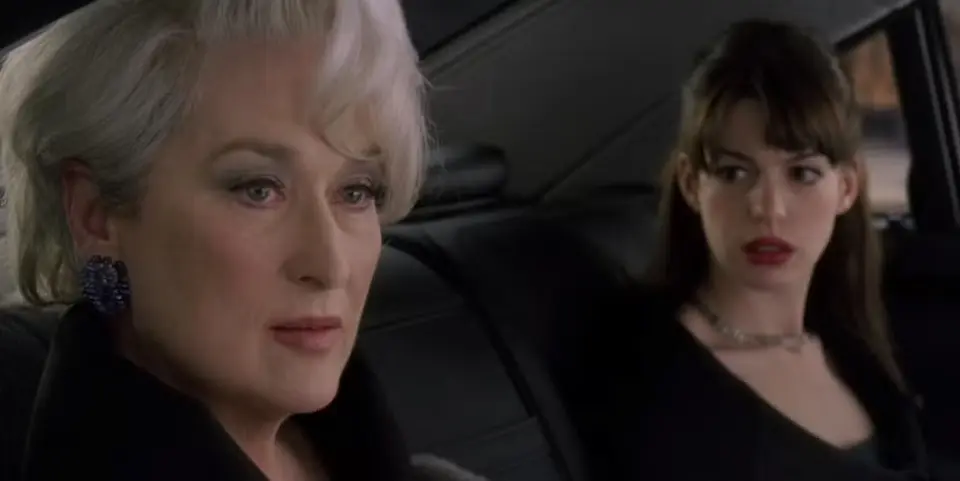
Miranda then tells Andy she knows the only reason Andy helped save Runway was to protect her own job—and that if it had been convenient, Andy would have stabbed her in the back. But she approves of this, stating she would have done the exact same to Andy. The film concludes with both women agreeing to betray one another when the time is right.
What else can I say? It’s modern corporate feminism in a nutshell. At least they were honest this time.
Box Office Results
As expected, in spite of being objectively bad, The Devil Wears Prada 2 is going strong at the box office. This is the film’s third weekend in theaters, and so far, the global revenue is $452,966,590, on a budget of $100,000,000. The extravagant marketing campaign probably cost 20th Century Studios good money, but if the next few weekends are still lucrative, it may have been a good investment.
Of course, no matter how much they can earn, the fact stands that The Devil Wears Prada 2 will never reach the cultural status of its predecessor. By this time next year, no one will remember it existed. The destiny of those 2000s direct-to-DVD sequels is now the one of high-budget theatrical releases. A melancholic commentary on the state of modern cinema.