Guy Ritchie’s “In the Grey”: When Dialogue Kills the Thrill
Henry Cavill, Jake Gyllenhaal, and big explosions. What can go wrong? A lot, apparently. Let’s discuss all the issues of Guy Ritchie’s In the Grey.

We are all aware that the entertainment industry has been going through a creativity crisis for some time now. While walking the endless landscape of sequels, prequels, preachy dramas, and unfunny comedies, I’ve developed an appreciation for films that, five or six years ago, I would have turned up my nose at: the ones that are just made for fun. I’m talking about films that are not pretending to give you lessons, that don’t try to reinvent the genre, but are just made for audiences to have some dumb fun, eat popcorn, and leave the theater with a smile.
So when I came across a trailer for a Guy Ritchie movie, with well-known actors and lots of action, I was convinced it would be that kind of project. In fact, it reminded me of The Ministry of Ungentlemanly Warfare from 2024, another Ritchie film that, while not extraordinary in any way, was pretty entertaining.
What is In the Grey About?
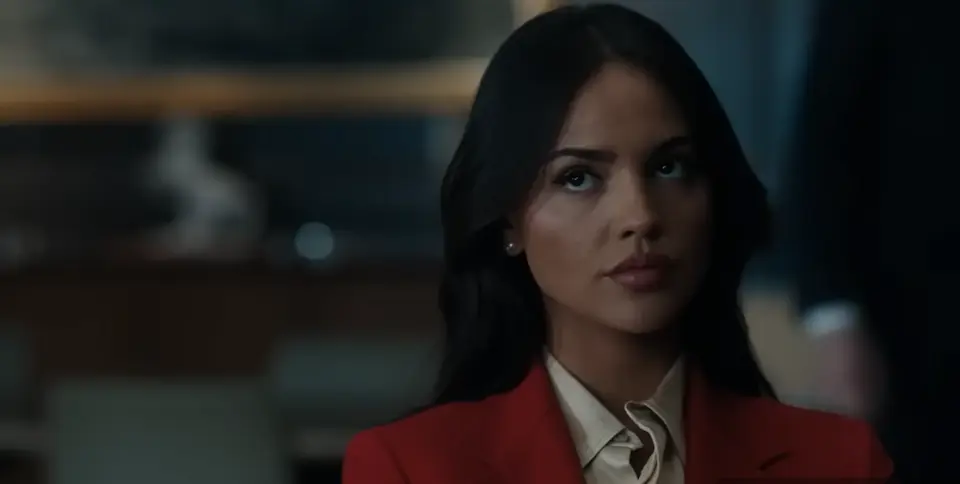
The film follows Rachel Wild (Eiza Gonzalez), a lawyer who earns a living by handling negotiations with big debtors. She is commissioned to collect a billion-dollar debt from a dangerous businessman. To get out of the meeting alive, Rachel will rely on two extraction experts, Sid (Henry Cavill) and Bronco (Jake Gyllenhaal).
Show, Don’t Tell: Why Exposition Dialog is Killing Entertainment
The main issue with In the Grey is the same one that I’ve been noticing for a while in modern media: the exposition dumps. It started creeping into other genres, but it has found its way to action movies, even big-budget ones. I have a recent example at hand: the last Mission: Impossible film. In this film the plan is overexplained in long scenes, as we see a montage of the places and people being mentioned. There are several cuts to include different characters telling parts of the story, as if they were dividing an assignment for school.
In the Grey is the same, but with fewer characters. We start with Eiza Gonzalez’ voiceover, explaining what she does for a living and introducing all the relevant characters. Then we move on to Henry Cavill and Jake Gyllenhaal taking turns to describe in minute detail the extraction plan. And just in case, they also prepared plans B and C, which they proceed to explain too.
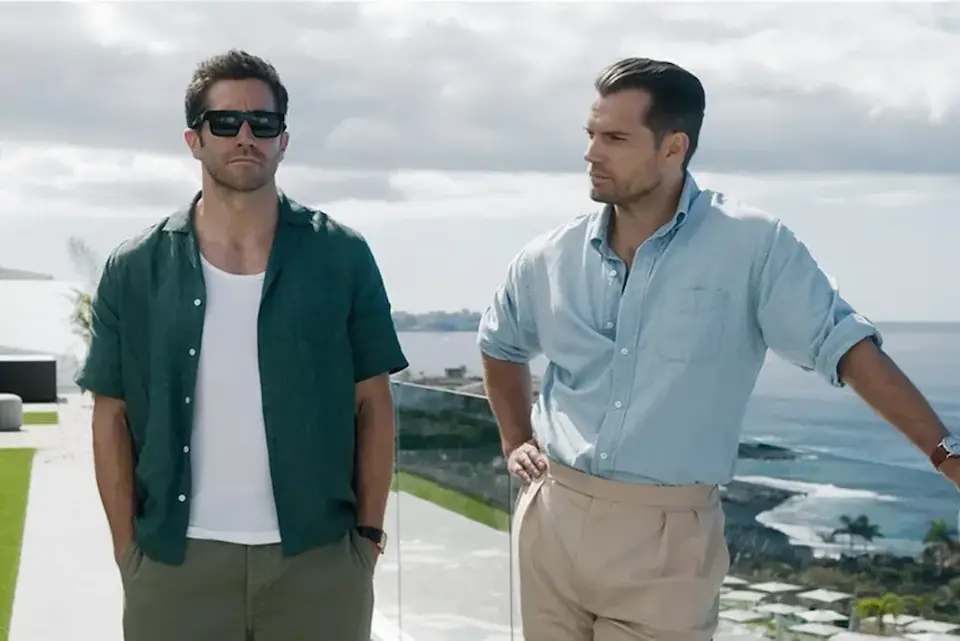
Exposition has become the strongest vice of action productions, despite creating huge problems for this genre specifically. Problems that can be summarized in three key points.
1. Tension, Are You There?
First of all, this type of approach kills the film’s momentum. I think this would be true for every genre, but in the case of action, where the main point is to create something visually impressive and dynamic, this amount of unnecessary dialog and voiceovers is counterproductive.
The expectation when watching an action flick is to have characters engaged in physical fights, high-speed chases, gunfights, and massive explosions. The audience is supposed to be on the edge of their seats, wondering what is going to happen, as the situation keeps escalating during the running time. Creating that tension is key to maintaining their attention.
Now, instead of making the characters attack the bad guys, you have them explaining exactly how they are going to do it. So when it actually happens… It falls flat. How can I be excited if you already told me what I was about to watch?
2. I Spy Some Nonsense
Action is a genre that does not always demand a great script. I’m not saying action films can never have excellent writing, but in general, if you have cool stunts and likable characters, even if at times the plot does not make a lot of sense, most viewers will turn a blind eye. The Mission: Impossible franchise fell into a number of inconsistencies and plot holes over the years and still managed to maintain its status in pop culture.
When your script verbally explains everything that happens on screen, you end up putting on display the story’s every weakness. You are making a close-up on elements or details that viewers might have otherwise ignored, which rarely works to the film’s benefit.
These are some of the nonsensical things I caught after just one viewing of In the Grey:
- The special team arrives at the villain’s island to practice for their mission. They explore the place in several vehicles, including three identical, showy red motorcycles, which they use to defy the police. Why doesn’t that recklessness get them identified and executed? (Or at least captured)
- How does Eiza Gonzalez manage to have her lawyers freeze all the villain’s assets (a judicial process that I assume is complex) in less than five minutes, with her still on the enemy’s territory?
- Why does Eiza Gonzalez decide to stop for a beer when she is aware the villain might want to kill her? And why do her bodyguards agree to take her
- How is it possible for lawyers and people who manage the assets of dangerous criminals to not check their offices for hidden microphones or cameras? Especially when they’ve just received visits or presents from unknown people.
I could go on, but it is best to move on to the third point.
3. The Place Where Charisma Goes to Die
In terms of character development, action requires a high level of charisma and a strong scene presence. Your audience has to like the characters, and above all, they have to believe that their victories were earned. Relying on exposition leaves almost no room in the script for the characters to breathe and exist on their own.
Henry Cavill and Jake Gyllenhaal are the ones in the cast that are capable of attracting people to the cinema. They both have experience working in action films and have natural charisma, but they are wasted by a story that is so tangled up in itself that it has no time to give either of their characters a distinct personality. When they are not explaining their plans to you, these two are having some banter. Nothing too original, the typical jokes you can expect from two men that spend all their time together.
Eiza Gonzalez’s performance consists of looking stoic and empowered while talking on the phone. That’s about all we get from the cast.
Consumers With Low Attention Spans or Plain Laziness?
Maybe the next important question is, why is it happening so often? What changed in the last few years that encouraged such a nefarious storytelling practice?
And it’s sad, but these days it’s not uncommon for movies and TV shows to be written with streaming services in mind. The exposition dialogue is there so consumers can follow the story while doing something else, like scrolling on their phones. In short, they are doing it because they know people don’t care.
I know I do care, because I paid for a ticket expecting a fun action film, and I ended up watching a podcast where Henry Cavill and Jake Gyllenhaal tell me all their plans. I was not expecting a project that reinvented the genre, but I wanted to have some fun. And I didn’t even get that!
Guy Ritchie is starting to become synonymous with “generic action flick,” which is discouraging because he has done some enjoyable movies in the past. And Henry Cavill is becoming what I call “the poster bait” of productions. He is slapped front and center in the promotional posters to get people’s attention, but the movie ends up being about an empowered lady with a single facial expression. This is not doing his career any favors, and someone should tell him that.
As far as I know, In the Grey is having a limited theatrical release. In my country it was available for one week only, and I had to make a bit of an effort to find a theater that was showing it. So I’m pretty sure it’s not a hit. And honestly, it’s no wonder.