The Monthly Dose of Horror: “Camp Miasma,” “Buddy,” and More
A little late, but let’s take a look at some horror movies from the past few months. Teenage Sex and Death at Camp Miasma, Buddy, Leviticus, and more.
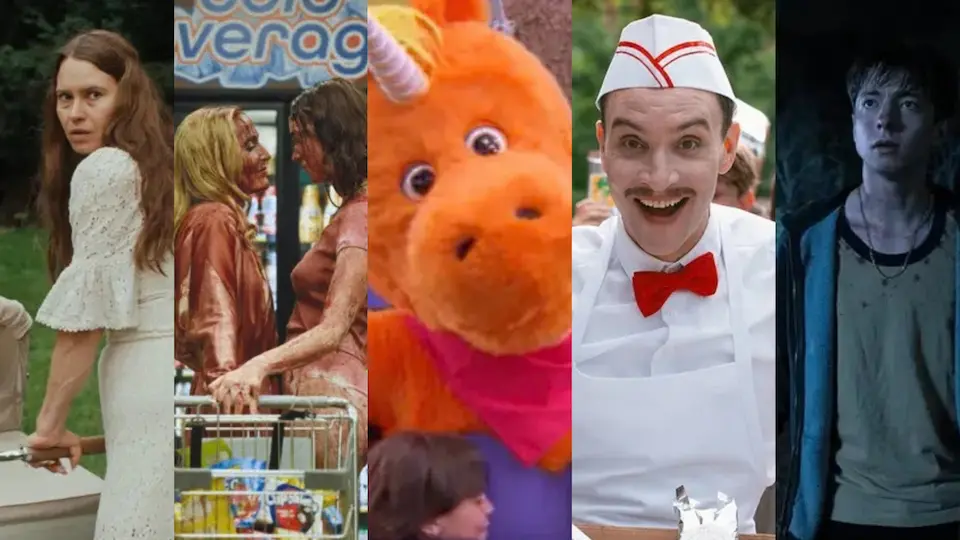
More than a monthly dose, this section is becoming an any-other-month dose of horror. Today’s selection includes five horror films that came out around August, so let’s say this article got stuck in development hell.
Even though I put together the list of films for every entry before watching all of them, this time around I unintentionally ended up choosing some projects with topics and messages in common. You’ll see what I mean.
I was also dumb enough to believe that a post about the highest-rated horror movies according to Letterboxd would have some basis in reality.
Nightborn
Saga and Jon are a happily married couple excited to start their own family. They are planning to renovate Saga’s childhood home in the Finnish forest to raise their kids closer to nature. But once she gives birth to their first son, Saga quickly realizes that her baby is not like everyone else.
The entire point of Nightborn is to show how cruel and unforgiving society is to mothers. Saga feels absolutely abandoned, left to recover from a traumatic birth on her own because her husband is stupid and the rest of the family just criticizes her every move. No one listens to her concerns, even when she points out disturbing things, such as the baby being covered in hair or breastfeeding hurting her in a pretty extreme way.

I understand what the filmmaker was trying to do, but the movie does not have much more to offer than that commentary on motherhood. Besides, isn’t this plot similar to Nightbitch, that film with Amy Adams that came out a couple of years ago? Though in this case it is the mom and not the baby who turns into a hairy creature. But the dumbass husband is a constant; you cannot have a man be smart.
Whatever atmosphere the project creates through its setting quickly dissipates into boredom due to the slow and uneventful plot. It seems that for Nightborn, being a mother is horror enough; there is no need to build anything else. The stupidity of the characters (the husband in particular) escalates with every passing minute, making the experience of watching it until the end a trying one.
Teenage Sex and Death at Camp Miasma
This film was such a disappointment to me. Teenage Sex and Death at Camp Miasma is one of those movies that were promoted around August as “one of the highest rated of the year,” with a 120% approval rating or something like that. At this point I should know better, but I was intrigued.
Truth be told, the opening credits are amazing: through a montage that shows a collection of newspaper articles, merchandising, games, and advertising material, we are introduced to Camp Miasma, a long-running slasher franchise. The video tour of this “museum” shows us in less than five minutes all we need to know: the success of the original movie, the departure of its female protagonist, the trail of bad sequels, the modern controversies, and the impending franchise reboot handed to a young director.
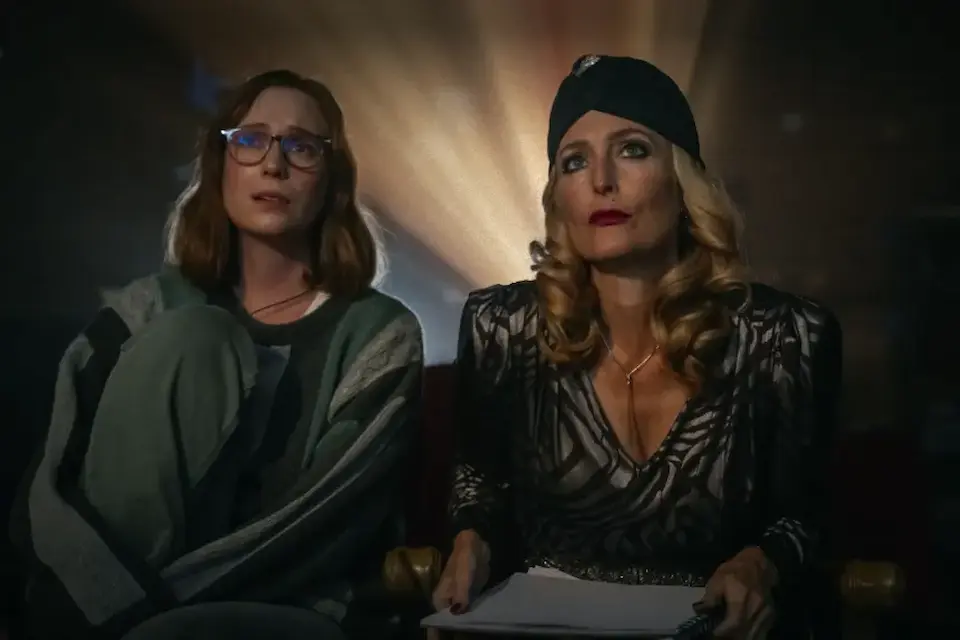
The new director, named Kris Williams, travels to meet with Billy Presley, the lead of the first movie, hoping to convince her to return to the franchise. It’s acknowledged that Kris was chosen for being a “queer filmmaker” in an attempt to appeal to modern audiences, as the franchise is now considered “transphobic” due to its villain’s story. Billy lives in the campground used to film the series, which will also give Kris an opportunity to see the place where it all began.
Everything had so much potential; for a good half-hour I genuinely believed that Letterboxd had not deceived me this time. However, all this interesting build-up devolves into a lesbian fever dream that bores you to tears. Yes, Kris and Billy have a nice time together. The entirety of the film is about “facing your dark desires” and “liberating yourself from shame.”
I guess the ideal audience for this is someone like Kris: a person who likes films that can be analyzed from a “modern academic” point of view and their own sexual sensibilities, instead of in terms of storytelling. On my part, I will just say I’m tired of stories about sexual desires and gay oppression. There are just too many of them.
Leviticus
Speaking of sex and gay oppression, this next film was also a Letterboxd recommendation. Surprise, surprise.
Leviticus tells the story of two teenage boys, Naim and Ryan, who live in a strict Evangelical Christian town. The boys have a secret relationship until Naim witnesses Ryan kissing Hunter, the pastor’s son. In an act of revenge, he reveals it to Hunter’s parents.
Both Ryan and Hunter are forced to undergo a sort of exorcism to cure them of their “tendencies.” After Hunter suffers a horrible death, Naim realizes that the ritual awakens a violent entity that harasses its victim to death. He tries to get help from the police, in an attempt to save Ryan, but his report gets back to his mother, who forces him to go through the ritual as well.

This is where the true horror is revealed: the entity can shapeshift, taking the form of the person its victim desires the most. In the case of Naim and Ryan, their respective entities take each other’s form and become increasingly violent as time goes by.
Even though Camp Miasma is visually more interesting, Leviticus has a straightforward plot. I didn’t dislike it; I think the performances were good, and the suspense works, but again: same theme. There are some very self-indulgent scenes that show the characters having a make-out session (I’m trying to keep it tasteful here) while they are in great danger. Why? It doesn’t make sense in that context and also makes it seem like their bond is only sexual, not emotional. And it’s important for the plot to make us believe they care about each other! This strange mix of horror story and horny movie that Letterboxd loves so much is very confusing.
Ice Cream Man
What can I say about it? I already knew it was going to be trash even before watching it. From the director of Borderlands, we got a film about an ice cream man whose treats turn all the children into homicidal zombies. It was made with a low budget, and it shows in every frame.
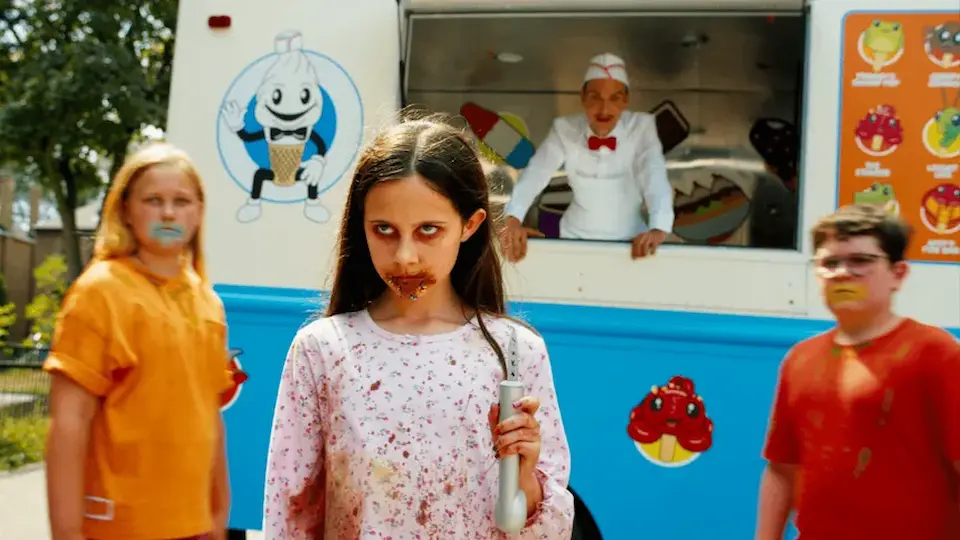
The only three kids in town who did not try the poisonous sweets spend most of the runtime trying to get somewhere safe. On the way, they discover that the ice cream man was a good person who was framed as a child abuser to cover up the local Church’s crimes (because the Church is evil in every film, you know). But later, the ice cream guy got into necromancy, and now he is ready for revenge against the whole town. Particularly, against the family of the protagonist, whose grandfather used his influence as a lawyer to get him convicted.
Everything looks cheap, the dialogue sounds like something a twelve-year-old would write, and the gore is there to try and cover for the lack of plot. The ending is stupid and predictable. Even by modern standards, Ice Cream Man shows mediocrity of the worst kind: the one that doesn’t even try.
Buddy
This was hands down the most fun I’ve had watching a horror film this year. And it’s surprising, because movies like this one are generally not my cup of tea. I was expecting one of those low-budget projects that turn Winnie the Pooh and Mickey Mouse into murderers, with lots of cheap violence and little plot, but this is different.
Buddy takes direct inspiration from the ’90s show Barney & Friends but replaces the purple dinosaur with an anthropomorphic orange unicorn. At the beginning of the film, we watch some episodes of the show, It’s Buddy, featuring the title character and a cast of child actors. Buddy seems to become more violent with every passing episode, cast members start to disappear, and Freddy, one of the kids, suspects that their orange friend is dangerous.
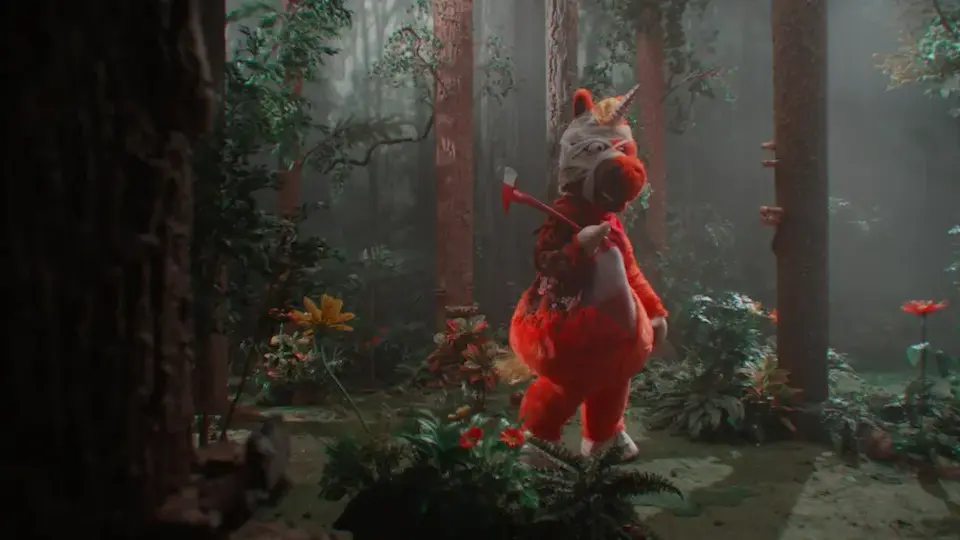
Turns out the kids are not paid actors but prisoners in a TV dimension where they only live to be part of the show. Unless they stop being useful to Buddy.
If you are old enough to remember Barney & Friends, you will appreciate the production design and the attention Buddy pays to getting the format of the show right: the structure of the episodes, the tone, and the sentient objects; I felt like I was watching ’90s/early 2000s TV. The children are great in their roles, and we also get Cristin Milioti playing one of the moms.
In short, a fun project that looks like it was made with love. Just don’t watch it with your kids; it could traumatize them. Buddy is not a good guy.
Not the most enjoyable list for me, but I’ll try and give it one last shot before the year is over: The Monthly Dose December edition is in production right now. Wish me luck.