Cinema Catch-Up: “Digger,” “Heart of the Beast,” And “Primetime”
A quick catch-up on September and October theater releases, featuring Warner‘s latest flop, loyal dogs, and Robert Pattinson’s mandatory monthly appearance. Let’s talk about Digger, Heart of the Beast, and Primetime.

Once again, it’s almost the end of the year, and I’m behind in my reviews. While I try to catch up with the new releases (I’ve already watched Sense and Sensibility, and I’m watching Wildwood and Clayface before the week is over), I thought it would be a good idea to cover a couple of films I watched pretty late and didn’t get to review at the time.
The selection for today includes Digger, Warner’s big bet that did not go as planned; Heart of the Beast, the one with Brad Pitt and the dog; and A24’s thriller Primetime.
Digger
When I say a film is pretentious, I mean to say that the project in question pretends to be way smarter and more profound than it actually is. And Digger is a pretentious project, whether you enjoyed it or not.
The film follows Digger Rockwell, an oil magnate whose business causes an environmental disaster. The focus is not really on the accident itself but on the aftermath, Digger’s attempts to handle the backlash, and his interactions and dealings with corrupt politicians to keep the situation under control.
Thirty minutes in, we have the first “plot twist”: what we are watching is the rehearsal of a play about events that have already happened in the universe of the film. Curtis Markson (played by Tom Cruise) is playing Digger. From this point on we move between those two plotlines: what is happening in the play and Curtis’ personal dramas and challenges with his character and how the play portrays him.
At the very end, we have the real plot twist: the play is a success, and while the audience exits the theater, we see that the city is destroyed by war and pollution. Those are the real consequences of what happened in the play.
The themes are not difficult to spot at all. Iñárritu presents a grotesque image of businessmen and politicians, focusing on how, despite the catastrophe, all they think about is how to save their own asses and maintain their power and reputation. But “grotesque” does not automatically mean clever or funny; and most of Digger’s attempts at humor leave you scratching your head. It feels way too self-important to be amusing.

On the other side of the plot, we have a fancy theater production that offers a depiction of the catastrophe and happens to be financed by the nephew of the real Digger Rockwell. Through the play, a man who probably profited from the catastrophe is trying to give normal people a “cathartic moment” to process what these powerful men have done to the world. The scene where the nephew (played by Jesse Plemons) gives a monologue on the subject is the most annoying of the entire production.
This back-and-forth is my main issue with the script. For example, the plotline of Curtis’ missing daughter keeps being brought up but goes nowhere. And that being the case, what was the point of revealing that we were watching a play so early on? Why not leave that surprise for the end? Perhaps because otherwise the film would have lost the opportunity to preach to us on how artists are elevated people who offer us comfort with their great work and moral high ground. We are so blessed to have them!
Despite the project not being my cup of tea, I must say that Tom Cruise’s performance is magnetic. His character’s monologues were some of the best scenes. Let’s see if he gets his Oscar at last. John Goodman is great as the president, and Sandra Hüller has a small part as Digger’s sister. I like to see her getting more opportunities in commercial productions. Technical aspects like photography and production design are certainly superior compared to today’s average film, but though I appreciate it, I find it impossible to connect with the story.
I must confess I’m surprised the reception was not positive; this seemed tailor-made to receive the critics’ adoration. But most of them panned the movie, and even before it came out, the press was predicting a huge failure at the box office. They were not wrong: Digger has been in theaters for a little over a month, and it has only grossed $49,000,000 worldwide, on a budget of $125,000,000. In fact, rumor has it that the production cost ended up being higher, according to Variety. The audience is divided: some people think this is going to be a future classic, while others think it is another expensive waste of time—no in-between. This disagreement started a pretty interesting conversation: do people actually want original movies? A fascinating subject for a longer article.
One way or another, there is no doubt that this has been one of the biggest flops of 2026.
Heart Of The Beast
Retired Special Forces Command Sergeant Major James Belmont and his combat dog Odin are camping in an isolated Alaskan area. Observing an approaching storm, James decides they should leave early on his seaplane for safety. But during the flight, the man suffers a heart attack, and the aircraft crashes into the water. Now James and Odin, beaten up but alive, must make their way back to civilization, covering more than 90 kilometers on foot, and exposed to the harsh conditions of the wilderness.
Heart of the Beast has a strong asset: the bond between James and Odin feels genuine and is the heart of the story. Having faced the horrors of war, they both suffer from PTSD and become each other’s only support. The dog is fantastic; the looks of unshakable love he gives to his owner will melt your heart even if you don’t have pets. I spent half of the film sobbing because I couldn’t bear the thought that one of them wouldn’t make it home.

Of course, the plot has its pitfalls. In the course of a couple of days James suffers a heart attack, falls into rapids and breaks an arm, gets attacked by a pack of wolves and a series of other minor accidents that aggravate his state. And I thought my week had been rough! The amount of bad luck the poor guy has starts feeling a bit exploitative after a while. It was like watching those 2000s soap operas where the protagonist manages to suffer an awful accident, lose her memory, go blind, and lose the love of her life, all in three episodes. James and Odin are in a dangerous situation; we get it. But even though Heart of the Beast’s main goal seems to be keeping us on our toes, we cannot ignore the beauty of the locations. This film was shot to highlight it as much as possible, offering a contrast with the danger the place represents for our protagonists.
Let’s take a look at the numbers: Heart of the Beast was released a week before Digger and has managed to gross around $181,000,000 worldwide, on a budget of $82,000,000. Not the biggest hit, but probably profitable.
This is not a project that came to reinvent the wheel; the relationship between a man and his loyal dog has been the topic of multiple films, and the adventure depicted, though entertaining, is not likely to be remembered as a classic must-watch in a decade. However, Heart of the Beast is the film I enjoyed the most on this list. Sincerity and emotional connection will always be more attractive to moviegoers than political or social lectures. Take notes, Hollywood.
Primetime
Starring Robert Pattinson (the most employed actor in the galaxy), Primetime follows television presenter Chris Hansen at the time his show How to Catch a Predator was at the height of its popularity. The film dramatizes the production of the reality show and the sting operation that ended in the suicide of Bill Conradt.
Due to my age, How to Catch a Predator is a pretty unknown phenomenon to me, and I’m unaware of whether the way the film portrays the events or the characters is accurate, so I’m basing my opinion only on what was happening on screen.
During its first hour, Primetime seems to have a defined focus on Chris Hansen as a person and how his rise in popularity is consuming him. He lives to work; he is neglecting his marriage and family and cheating on his wife. The opportunity to move the show to the primetime slot looks like the next big step to consolidate his career but also makes it imperative to work with bigger cases to retain the viewers’ attention. This first half of the film is the most effective.
In the acting department, Robert Pattinson does a good job, as usual, but I’ve seen so much of him this year that nothing he does surprises me anymore. That’s why it’s important for actors to take breaks. The one who did surprise me was Skyler Gisondo as “Decoy Dan,” the young aspiring actor hired to lure the predators into the trap. I’ve only ever seen him in the dumb Superman last year, but I liked his performance here.
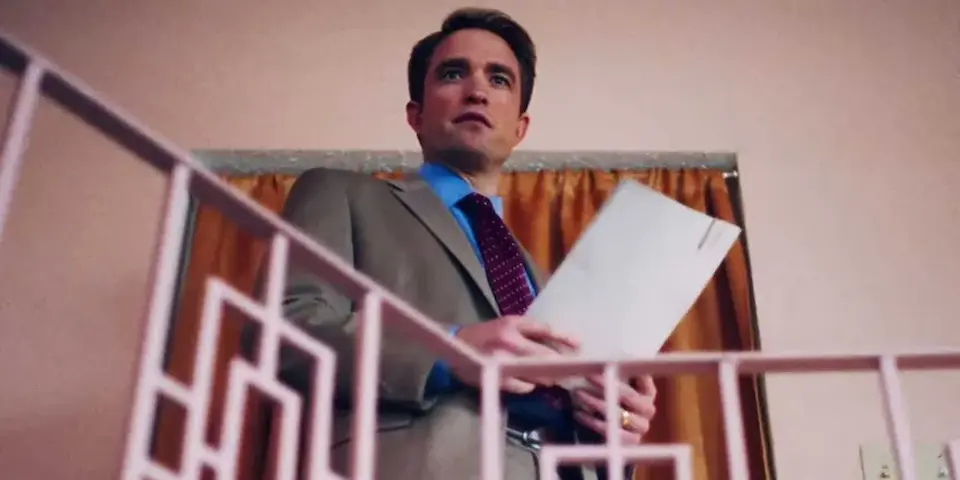
The editing choices, which include footage of security cameras (as was used in the original show, I guess) and moments of visual noise whenever one of the characters gets overwhelmed or scared, create a pretty cool analog look that makes the experience more immersive. Moving on to the second half, both the plot and the visuals start to get messier. Maybe it was done on purpose, to portray Chris’ descent into chaos, but it felt like an interruption. Because when the movie is over and you look back on it, you realize you didn’t really learn much about anything: not about Chris Hansen, not about How to Catch a Predator, nor about Bill Conradt’s case. In short, you’ve just watched two hours of fireworks with a surface-level plot.
Is this bad? Depending on your taste, I guess. Personally, I need to know what the point of the film is before the credits roll. The only time you are allowed to not have a point is if you’re doing a character study, but Primetime is not exactly that. I don’t know; I’m feeling ambivalent towards this project: I enjoyed watching it, but I’m not sure that I’ll revisit it.
Box office-wise, Primetime has made $53,000,000 worldwide on a budget of $15,000,000. The theater release has been more limited in this case (I believe it will reach some countries only next year), so especially if it gets any nominations during the awards season, it may still make some more money.
Conclusion: October and September were a mixed bag, but the movie that has a good dog always wins.