“Disclosure Day”: Spielberg’s New Extraterrestrial Film is Obsolete On Arrival
The legendary director brings us a film that manages to be outdated while firmly committing to some of modern Hollywood’s sins. Let’s talk about Disclosure Day.

Even though Spielberg’s latest film was not on my list of most anticipated films for 2026, I still walked into the theater expecting a good experience. Extraterrestrials are not an interest of mine, but since it is not this man’s first time delving into the topic, chances are he had something interesting to say on the matter.
It pains me to give a bad review to someone so influential to cinema history as Steven Spielberg is. However, it is undeniable: Disclosure Day is one of his worst movies. Allow me to walk you through this issue and try to understand where and how this project fails.
What is Disclosure Day About?
In a world on the brink of war, cybersecurity specialist Daniel Kellner (Josh O’Connor) steals sensitive material that proves the existence of aliens, and documents several alien/human contact moments dating back decades. He is being hunted by Wardex Corporation, a company operating as a secret extension of the U.S. government that wants to prevent the leak at any cost.
During his journey to bring the material to safety, he will cross paths with Margaret Fairchild (Emily Blunt), a TV meteorologist who has developed a strange gift.
How Bad Is It?
I had a hard time figuring out the reason I didn’t like this film. I watched it on Thursday and spent the weekend thinking about it. After reading several people’s negative reviews, I can say that I agree with them on many points, but at the same time, I’m confident that there are a lot of people who will defend this film. And that is because Disclosure Day is not bad in the same sense movies tend to be bad in the current cinematic landscape. I’m going to try and explain it.
To my understanding, films in the 2020s can be classified into three big groups: the ones that are a clear propaganda piece, the ones that are creatively and technically incompetent, and the ones that are a mix of the first two. This project does not fit comfortably in any of these boxes.
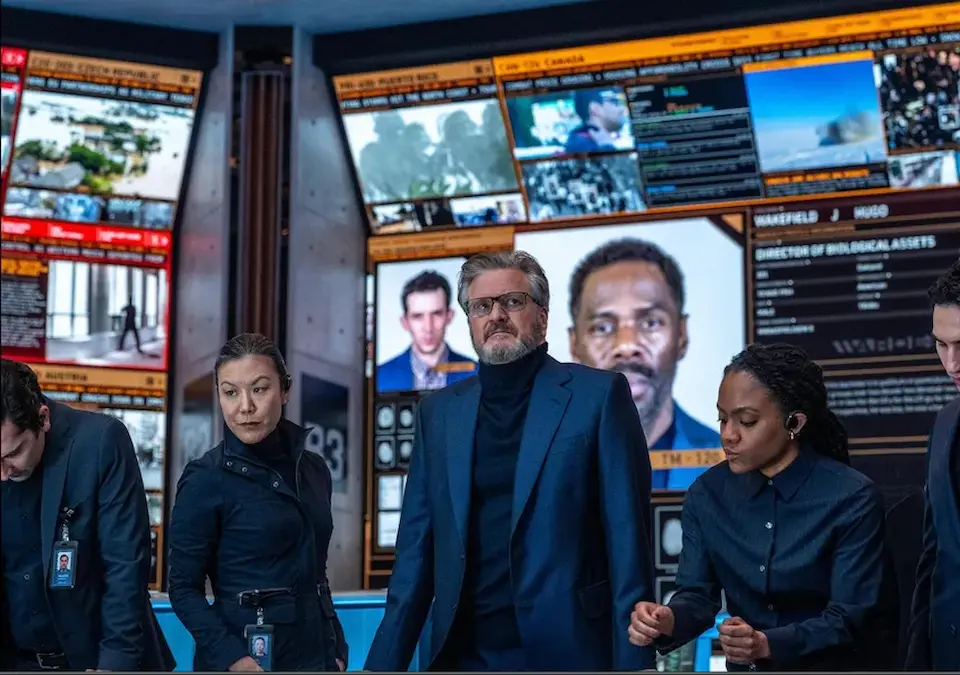
This is not bad in the same loud and aggressive way a Marvel movie or a Disney live-action is bad, nor in the same preachy way that one of those independent feminist projects made to win awards is bad. These are cases in which the general impression is that the people behind the project are not only morally bankrupt but also that they have no idea how to make a movie at all. Disclosure Day, on the other hand, is bad in a solemn and prestigious kind of way.
The project has talented people behind it. Aside from Steven Spielberg directing, we have John Williams’ score, David Koepp’s script, and Janusz Kamiński’s cinematography. These are people with long careers who have collaborated before. In the acting department, Colin Firth and Emily Blunt are the ones who stand out, but the rest of the cast does a pretty good job as well. My point is that, on the surface, the film is not the blunt exercise of incompetence we have become used to seeing. It has a degree of quality that I believe will be appreciated by many and will make them less critical of the film than they would normally be.
But the story’s incoherence, added to the crushing lack of understanding of how people get informed nowadays, renders the film and its premise completely obsolete from the start.
The Script
As usual, the film’s problems start with the screenplay. Disclosure Day was promoted as an exploration of how the discovery of extraterrestrial life would affect the world. The project spends more than two hours setting this up, but we end up learning nothing about it.
The script displays a lack of clarity not only on the general themes of the story but also on the handling of storylines. Everything seems to be happening by chance, the characters’ backstories and motivations are superficially developed, and the “explanation” to the main mysteries is poor.
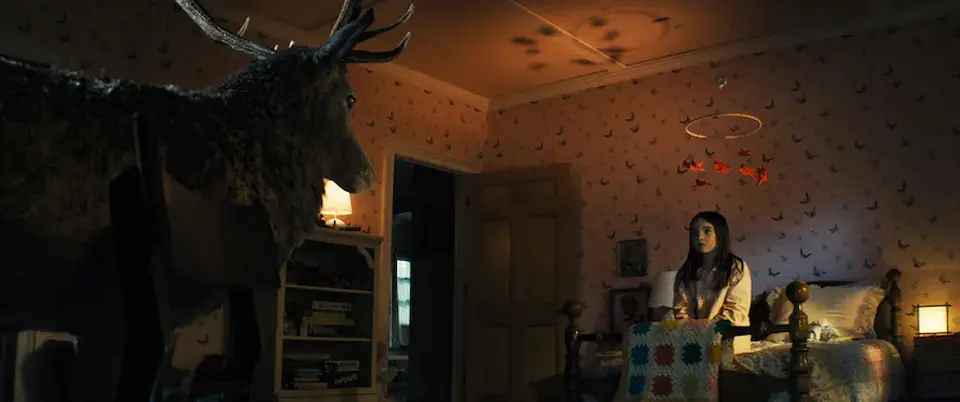
The design of the aliens is questionable, and the scope of their power is inconsistent: if their technology is so next level, and they are so intellectually and morally superior, how come they can be easily captured and tortured by humans? How is it possible for those three devices to hold all that power? Why can humans use it for whatever the script needs to solve? And how does it connect with the protagonists’ abilities?
And there is this whole story of a possible World War III running in the background that also takes us nowhere.
All these points turn the film into a confusing experience. You sit in the theater for two hours, waiting for something to happen, and just when you are about to get something relevant, the film ends. However, I might go as far as to say one of the fatal errors this movie makes is regarding their disclosure method.
Stop Clinging to Legacy Media
Let’s try a little game: imagine you manage to steal a lot of classified information the government does not want to become public. You are determined to expose them, but they have identified you, so now your life is in danger. If they find you, both you and the information will disappear without a trace. Under those circumstances, what do you think would be the most common-sense move you could make?
a) Immediately upload all the material on social media.
b) Contact someone who has a big social media following and send them the material so they can upload it, and it spreads faster.
c) Plan an elaborate scheme to get the physical copies of your material to a local news station and hope they will broadcast it.
If your answer was a) or b), congratulations, you are a smart person. And you’re also in for a huge disappointment.

Yes, the ultimate goal of this group of rogue empathetic agents is to get the whole issue on the news so they can bring an actual alien to the TV studio, and the creature can communicate a message to Daniel and Margaret live.
If the film is taking place in 2026 (which it is, I’ve checked), what would be the point of having this disclosure on TV? The number of people who still get their information from TV news is so small that the “revelations” would reach almost no audience. I talked about this a few weeks ago when I reviewed The Devil Wears Prada 2: Hollywood refuses to acknowledge that legacy media does not dictate public conversation anymore and has little to no impact on it. Their insistence on this point is starting to make movies pretty unenjoyable, because it takes you out of the story.
Besides, we are pretty sure that the existence of aliens is the smallest and most harmless thing that governments are hiding from us citizens. Your CGI extraterrestrials don’t impress us anymore.
A Challenge to Christianity. Kind Of.
I must make a short mention of this topic, which I became aware of after watching the film. Apparently, Spielberg mentioned in an interview that Disclosure Day would “challenge the Christians’ beliefs.” Of course, I cannot help but wonder why Spielberg speaks only of the Christians. If the film truly had the capacity to challenge the very idea of God, wouldn’t that apply to all religions? Weird.
That was enough for some media to label the film “antichristian”, which is a bit far-fetched. I 100% believe attacking Christianity could have been one of the project’s goals, but in any case, results were not very effective. The topic is so poorly developed in the runtime that I almost do not include it in the review.
The existence of other forms of life in the universe does not represent any threat to the existence of God. I don’t know why it would. And honestly, I don’t think the film knows either.
I believe they tried to portray these aliens with god-like powers in search of that reaction, but the film lacks a true exploration of exactly how this could become a problem, so it actually encourages no reflection on the subject.
Critical Reception & Box Office Results
So far, Disclosure Day seems to be performing very well at the box office. Today’s updates set the global number at $93,997,925. According to Variety, the production budget was $115,000,000, with a marketing cost of around $80,000,000. This same article estimates that a $300,000,000 gross will be enough for the film to break even.
Even though that is not an impossible scenario, I honestly doubt the film will reach that number. Steven Spielberg’s name is still enough to attract people to theaters, and critics in legacy media are praising the project, but Disclosure Day’s word-of-mouth is already not great.
I’m interested in seeing how Obsession and Backrooms (which I will talk about soon) will hold up against this release in the next week or two. We also should not forget the release of Toy Story 5 at the end of this week.
I want to close by saying that, while talent is important when making movies, self-awareness and having a tight grip on reality are also fundamental. But I’m guessing this is precisely what Hollywood (and sadly, also Spielberg) are lacking nowadays.